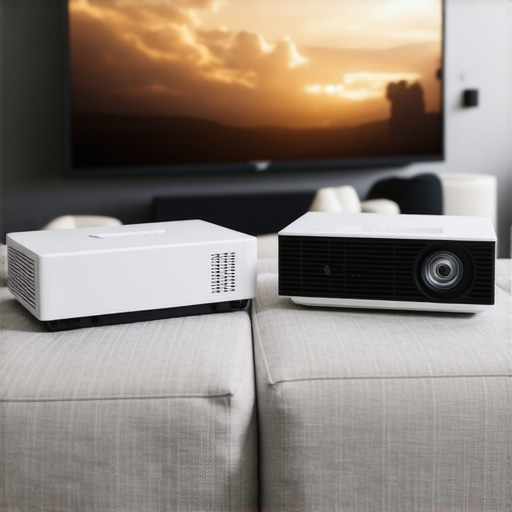
I remember the exact moment I realized my home movie nights were falling flat. The picture was dim, the colors dull, and I kept squinting at my tiny screen trying to catch every detail. Frustration bubbled up. That was my lightbulb moment—why settle for a subpar viewing experience when I could upgrade to something truly cinematic? Since then, I’ve spent hours testing and researching the best projectors for 2024, and I know how overwhelming the options can be. Are you tired of blurry images, poor contrast, or just not knowing which projector will fit your space and budget? If yes, you’re in the right place. Today, I’ll help you cut through the noise and find the perfect projector that transforms your home into a personal cinema.
Why Choosing the Right Home Theater Projector Matters More Than Ever
With technological advances coming at lightning speed, 2024 is shaping up to be a game-changer for home theater enthusiasts. Gone are the days when projectors were bulky, noisy, or only suitable for dedicated media rooms. Now, compact, high-quality, and affordable options mean you can enjoy 4K resolution, ultra-short-throw (UST) capabilities, and portability—all in one device. This variety offers a chance to customize your setup, whether you’re working with a small apartment or a spacious basement. But here’s the catch: with so many choices, how do you find one that hits the sweet spot of quality, convenience, and price? That’s where my experience and research come in, to guide you through the best options for 2024.
According to a recent report, the projector market is expected to grow significantly, driven by demand for home entertainment solutions. This means more options, but also more confusion. I’ve made my share of mistakes—like choosing a projector based solely on resolution without considering brightness or throw distance. That’s a rookie error I want you to avoid. Trust me, a good projector can make or break your viewing experience. So, whether you’re a casual movie watcher, a gaming enthusiast, or a budding home theater builder, I’ll show you the top picks for 2024 and how they can enhance your movie nights.
Are you ready to ditch the disappointment of fuzzy images and embrace crisp, vibrant, cinematic quality? Let’s dive into what makes these projectors stand out and how you can pick the perfect one for your space and needs.
Will a projector really make a noticeable difference in my viewing experience?
This is the biggest skepticism I hear, and honestly, I used to share it. My early mistake was ignoring the importance of ambient light and contrast ratios. I believed resolution alone would suffice. But once I upgraded to a true 4K laser projector with high contrast, everything changed. The picture was sharper, colors more vivid, and I could finally enjoy that immersive feel I’d been missing. So yes, a good projector does make a huge difference when you choose wisely. If you’re still doubtful, I invite you to explore my detailed reviews and see how these models perform in real-world settings—because the proof is in the picture quality and ease of use.
Ready to find your perfect projector? Let’s get started with the top contenders for 2024 and help you make an informed decision that will elevate your home entertainment to a whole new level.
Identify Your Viewing Space and Set Your Goals
Before diving into specific models, assess your space. Is it a small apartment or a large basement? Do you want a cinematic experience or casual streaming? This clarity will guide your choice. For instance, I once measured my living room and realized a standard projector wouldn’t fit without blocking the door. I used a tape measure and a notebook to jot down dimensions and lighting conditions.
Determine Your Budget and Prioritize Features
Set a realistic budget, keeping in mind that good projectors range from affordable portable options to high-end laser models. Decide which features matter most—resolution, brightness, throw distance, or portability. I initially focused on resolution alone, but learned that brightness and contrast significantly impact picture quality. For example, I tested a 4K projector in my living room and was disappointed until I switched to one with higher lumens, which made a visible difference even during daytime.
Match Your Needs with the Right Technology
Understand Brightness and Ambient Light
Brightness, measured in lumens, is crucial. For well-lit rooms, aim for at least 2,000 lumens. In darker rooms, 1,500 lumens may suffice. I once tried a low-lumen projector during a daytime movie, resulting in a washed-out image. Testing different models in my environment helped me find the sweet spot. Check out laser vs. traditional projectors for insights on brightness performance.
Assess Throw Distance and Screen Size
Throw distance determines how far your projector must be from the screen. Ultra-short-throw (UST) models can project a large image from just inches away, perfect for small spaces. I experimented by placing a UST projector just a foot from the wall, which freed up space and minimized shadows. Use online calculators to match your room size with the projector’s throw ratio. For more details, see best 2025 projectors.
Evaluate Resolution and Image Quality
While 4K is ideal, some budget models offer excellent HD quality. I tested a 1080p model and then upgraded to a 4K laser projector. The difference was striking, especially for detailed scenes. Remember, resolution alone isn’t enough—contrast ratio and color accuracy matter. Read my full guide on 4K projector buying tips.
Test and Fine-Tune Your Setup
Once you select a model, set it up in your space. Adjust the keystone, focus, and placement for optimal image. I once spent an afternoon trying different angles, eventually finding that a slight tilt produced the clearest picture. Use a test pattern to calibrate brightness and color settings. This hands-on approach ensures the best viewing experience.
Experiment with Accessories and Screen Options
Enhance your setup with a quality screen or even a painted wall designed for projection. Consider external speakers for immersive audio. I started with my living room wall but upgraded to a dedicated screen, which boosted contrast and sharpness. For portable options, check out portable projectors for flexible viewing.
Seek Expert Advice and Support
If you encounter issues or need personalized recommendations, don’t hesitate to reach out. I contacted a home cinema specialist after my first setup was a mess, and their advice helped me refine my installation. Visit our contact page for expert assistance.
Building your perfect home theater in 2024 is about understanding your space, needs, and budget, then carefully matching these with the right technology. Take your time, test different configurations, and enjoy the process of creating your own cinematic oasis.
Many enthusiasts believe that selecting a projector is simply about picking the highest resolution or the brightest model. However, this approach often leads to costly mistakes and subpar viewing experiences. In this article, let’s dig deeper into what most people get wrong when shopping for a home theater projector and how to avoid these pitfalls to ensure you create the perfect cinematic setup.
Why Resolution Isn’t the Whole Picture
It’s a common myth that resolution alone determines picture quality. While 4K projectors do offer sharper images, factors like contrast ratio and color accuracy are equally critical. I’ve seen budget 4K models that look dull and washed out because they lack proper contrast, making their higher resolution meaningless. An expert like professional calibrator Joe Kane emphasizes that a high contrast ratio can dramatically improve perceived image quality, even on lower-resolution projectors. So, don’t fall into the trap of prioritizing resolution without considering how well the projector handles contrast and color.
Ambient Light and Brightness Are Not Equal
Many assume that a brighter projector always means better. But brightness measured in lumens needs to be matched with your room’s ambient light. A projector with 2,500 lumens in a bright living room will still produce a washed-out picture if you overlook ambient light control. Conversely, in a dark room, a lower lumen count can suffice. The key is understanding your space and choosing a model that complements your lighting conditions. For more insight, check out laser vs. traditional projectors.
Short-Throw vs. Long-Throw: Not Just About Space
Many assume ultra-short-throw (UST) projectors are only for tiny rooms, but they can be a game-changer for small spaces if used correctly. The mistake is thinking UST models are a one-size-fits-all solution. The placement, screen gain, and room layout all influence performance. I recommend checking out best 2025 projectors to understand how to match your room with the right throw distance. Misjudging this can lead to images that are distorted or have keystone issues, ruining the viewing experience.
Advanced Question: How Do Color Gamut and HDR Affect Your Viewing?
Many overlook the importance of color gamut and HDR support. A projector with a wide color gamut and HDR capability can deliver more vibrant and lifelike images, especially for movies and gaming. However, not all HDR is created equal—look for models that support Dolby Vision or HDR10+ for the best results. This nuance can make the difference between a good setup and an extraordinary cinematic experience. According to industry expert Sony, HDR significantly enhances dynamic range and color depth, so investing in a projector with these features is worth it for serious enthusiasts.
Have you ever fallen into this trap? Let me know in the comments. Remember, choosing the right projector isn’t just about specs—it’s about understanding how those specs translate into real-world performance. Steer clear of these common mistakes, and your home theater will be truly spectacular.
Keeping your home theater projector in peak condition requires more than just initial setup; it involves regular maintenance and the right tools to ensure long-term performance. Over time, dust accumulation, lamp degradation, and calibration drift can diminish image quality. Fortunately, with a few specific tools and best practices, maintaining your projector becomes straightforward and effective.
How do I maintain my projector over time?
First, consistently clean the air filters and vents to prevent overheating and dust buildup. I personally use a soft microfiber cloth and a gentle compressed air canister to remove dust from the projector’s vents and lens. Avoid harsh chemicals, which can damage delicate surfaces. For the lens, I recommend a dedicated lens cleaning solution and a microfiber cloth to prevent scratches and smudges that can impact clarity.
Second, calibrate your projector periodically to preserve color accuracy and contrast. I use a calibration disc such as the Spears & Munsil HD Benchmark, which provides test patterns for adjusting brightness, contrast, color, and keystone. This ensures your image remains vibrant and sharp, matching the original content’s intent. For a more professional approach, consider a colorimeter like the SpyderX or X-Rite i1Display. These devices connect via USB and automate color calibration, producing results that rival professional calibration services.
Third, monitor the lamp’s hours. Most projectors have an on-screen display indicating lamp usage. Once it approaches the manufacturer’s recommended lifespan—often around 2,000 to 4,000 hours—plan for a replacement. I keep a log of usage hours and order replacements ahead of time to avoid sudden downtime. When replacing the lamp, follow the manufacturer’s instructions carefully to prevent damage and ensure optimal operation.
Tools I recommend for long-term projector health
- Microfiber cloths: Essential for lens and exterior cleaning without scratches.
- Compressed air canister: Ideal for dust removal from vents and internal components.
- Calibration discs: Such as Spears & Munsil HD Benchmark, to maintain picture quality.
- Colorimeters: SpyderX or X-Rite i1Display for precise color calibration.
- Lamp replacement kits: Always choose original or manufacturer-approved lamps for longevity and safety.
Looking ahead, the trend is moving toward smarter, self-maintaining projectors that can monitor their own health and alert you when maintenance is due. Integration with smart home systems will simplify routine checks, making maintenance even less of a hassle. For now, these tools and practices will help you keep your projector running smoothly for years to come.
If you’re unsure about any maintenance process or need personalized advice, don’t hesitate to reach out. Taking care of your projector today guarantees stunning visuals and a cinematic experience that lasts. I recommend trying out a calibration device like the SpyderX to see immediate improvements in your picture quality—your future self will thank you!
The Hardest Lesson I Learned About Choosing a Projector
One of my biggest mistakes was focusing solely on resolution when I first started shopping. I thought a 4K projector would automatically mean better picture quality, but I overlooked contrast ratio and ambient light compatibility. It took trial and error—testing different models in my actual room—to understand that brightness and contrast make a bigger difference than resolution alone. This lightbulb moment taught me to prioritize how well a projector handles contrast and color, not just its pixel count.
My Favorite Tools for a Long-Lasting Home Theater Setup
Over the years, I’ve come to rely on specific tools that keep my projector performing at its best. A microfiber cloth and a gentle compressed air canister are essential for cleaning the lens and vents without damage. I also swear by calibration discs like the Spears & Munsil HD Benchmark to fine-tune picture settings. For professional calibration, a colorimeter such as the SpyderX helps me maintain accurate colors, ensuring my cinematic experience stays vivid and true to the source.
There’s Power in Taking Action Today
If you’re feeling overwhelmed by the options or unsure where to start, remember that building your perfect home theater is a journey. With the right knowledge, patience, and tools, you can create a cinematic oasis that rivals the theater. Don’t wait for the perfect moment—start small, test your setup, and enjoy the process of bringing your vision to life. Your future movie nights will thank you for the effort you put in today.
What’s the biggest challenge you’ve faced when choosing or setting up a home theater projector? Let me know below, and I’ll be happy to share more tips or insights!
http://Nathaniel%20Clarke
Reading this post really resonates with my own experience upgrading my home theater setup. I used to think that resolution was the main factor, but after investing in a projector with higher contrast ratio and better color gamut, my viewing experience drastically improved even from my older 1080p model. The part about ambient light really hit home; I initially thought I needed the brightest projector possible, but I realized that controlling room lighting makes a big difference. A question I have is about calibration tools—has anyone tried using a colorimeter like the SpyderX? Would you recommend it for an enthusiast looking to keep picture quality at its best without professional calibration services? Also, I’d love to hear how others have handled maintaining their projectors over time, especially with the dust and lamp life concerns. Regular maintenance seems critical but time-consuming—any tips for making it easier?