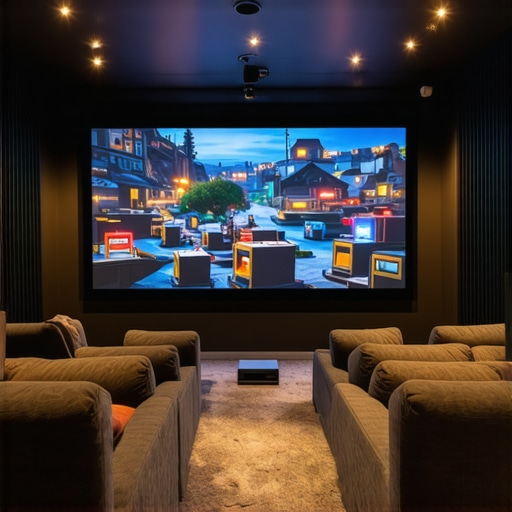
I remember the moment clearly—my long-awaited movie night was crashing down because my beloved old projector just couldn’t handle the glare or the crispness I craved. It was like looking through a foggy window. That frustrating realization sparked a lightbulb moment: I needed a better projector—something that could deliver true 4K resolution, vibrant colors, and immersive sound, all without breaking the bank or sacrificing space. Have you ever faced that disappointment, only to wonder if there’s a solution that truly makes your home cinema dreams come true?
Why Settling for Less Just Isn’t an Option Anymore
In recent years, the technology behind home theater projectors has skyrocketed. The days of grainy images and dull colors are gone. Today, a good 4K projector can turn even a modest living room into a cinematic paradise. But with so many options like portable projectors, ultra short throw models, and laser projectors flooding the market, it’s easy to feel overwhelmed. I’ve made my share of mistakes—like choosing a model that promised top specs but delivered poor contrast or sluggish performance. Early on, I underestimated how crucial brightness and lens technology are, often ending up with washed-out images or shadows that never seemed right. That’s why I want to help you avoid the pitfalls I faced and find a projector that truly meets your needs. For instance, a recent study highlights that ultra short throw projectors can save space without compromising image quality, making them perfect for smaller rooms (discover how here). Whether you’re aiming for a portable setup or a dedicated home theater, understanding what features matter most is essential to selecting the right device. Are you tired of blurry streams and dull images ruining your movie nights? If so, stay tuned. We’re about to explore every critical aspect you need to consider—so you can make an informed, confident choice that transforms your viewing experience forever. Ready to dive into the details?
Assess Your Space and Choose the Right Projector Type
Start by examining your room’s size and lighting conditions. For small or cluttered spaces, ultra short throw projectors are ideal because they can project a large image from a short distance, avoiding shadows and clutter. If you have a dedicated room with controlled lighting, a traditional home theater projector with high contrast and brightness will deliver cinematic quality. For portability and outdoor setups, explore portable 4K projectors that offer flexibility without sacrificing image clarity.
Understand the Core Technologies and Features
Different projectors employ various technologies, each impacting your viewing experience. Laser projectors use laser light sources for brighter, more vivid images and longer lifespan. Think of laser as upgrading from a flashlight to a floodlight—more powerful and durable. Conversely, lamp-based projectors rely on traditional bulbs, which are more cost-effective but may require frequent replacements. When shopping, compare laser vs. traditional projectors to see which suits your needs best.
Prioritize Resolution and Image Quality
Achieving crisp 4K resolution involves more than just buying a 4K projector. Pay attention to lens quality and image processing features. A high-quality lens minimizes distortion and maximizes sharpness, much like using a high-grade camera lens for pristine photos. During my first attempt, I mistakenly focused solely on resolution but ignored lens clarity, resulting in a slightly blurry image. Combining 4K resolution with a good lens ensures you get cinema-grade detail at home. For guidance on selecting the best models, consult the best 4K home theater projectors.
Adjust Brightness and Contrast for the Perfect Shadow Play
Brightness levels, measured in lumens, determine how well your projector performs in ambient light. For rooms with some natural light, aim for a projector offering at least 2,500 lumens. Think of brightness as the volume knob—too low, and details fade; too high, and scenes look washed out. Contrast ratio blends darks and lights, akin to adjusting toe shoes for ballet—precision matters. I learned this the hard way when my early projector lacked sufficient contrast, making dark scenes nearly invisible. Test different settings to find the optimal balance, especially for cinematic shadow depths.
Position and Calibration Are Key to Sharp Images
Proper placement ensures maximum image quality and a seamless experience. Use a mounting wall or ceiling bracket for stability, avoiding shaky images. For ultra short throw models, position the projector just inches from the wall—think of it as a close-up camera shot. Calibration involves adjusting focus, keystone correction, and zoom to eliminate distortions. During my setup, I initially misaligned the projector, causing trapezoidal images. Following calibration guides, I achieved perfect focus and alignment, transforming my viewing into theater quality.
Integrate Audio for a Complete Experience
While built-in speakers are convenient, investing in a dedicated sound system amplifies immersion. Consider connecting your projector to a soundbar or home theater receiver. Laser projectors often support higher-quality audio outputs, enhancing the overall experience. My first attempt involved using only speakers built into the projector, which was underwhelming. Upgrading to a soundbar brought the soundtrack to life, matching the visual clarity with audio richness. Explore options at top home theater projectors.
Test and Fine-Tune Your Setup
Finally, spend time reviewing your movie scenes to identify any distortion or color imbalance. Small tweaks in settings can vastly improve image fidelity. Use test patterns or calibration discs to spot issues like gamma errors or color tints. My early setup misaligned colors, but a quick round of calibration corrected the hues and enhanced contrast, elevating my viewing quality. Regularly maintain your projector by cleaning the lens and updating firmware to keep it performing at its best.
Many enthusiasts believe that choosing a 4K projector or an ultra short throw model is simply about pixel count or size, but the reality is far more nuanced. A common misconception is that higher resolution alone guarantees cinema-quality images, yet factors like lens quality, color rendition, and processing capabilities often have a bigger impact on actual viewing experience. For example, a recent survey from experts in home cinema reveals that even 4K projectors with inferior lenses can produce blurry or distorted images, negating the resolution advantage.
One trap I frequently see is the assumption that portable projectors can’t match home theater models. While portable devices offer convenience, many overlook typical compromises such as lower brightness levels or less sophisticated image processing. However, breakthroughs in laser lighting and compact optics are now bridging that gap, making high-quality portable projectors a viable option for most users. For a detailed comparison, explore the best portable 4K projectors guide.
A particularly sneaky myth surrounds ultra short throw (UST) projectors. Many think that UST models are ideal for every small space, but their effectiveness heavily depends on room conditions and screen setup. Poor calibration or reflective surfaces can cause significant image distortion. This is why precise placement, calibrated keystone correction, and good surface choice are essential. Want to avoid the common pitfalls with UST models? Check out this guide on ultra short throw projectors.
Advanced users often ask, “How do I get the most out of my laser projector?” The nuance here lies in understanding laser’s benefits—brighter whites, longer lifespan, and better contrast—as well as its limitations, such as higher initial costs and the need for specific calibration. Laser technology isn’t just about brightness; it’s about achieving consistent, vibrant colors without aging like traditional lamps. A study by industry leaders emphasizes that laser projectors can outperform traditional lamp models in color accuracy and longevity, but only if correctly integrated into your setup. When investing in a laser model, consider also the environment and your calibration skills to maximize its advantages.
Let’s not forget common mistakes during installation. Many assume that simply pointing the projector at the screen will do, but precise alignment, focus adjustment, and keystone correction are crucial. Overlooking these can result in trapezoidal images or blurred edges, undermining the high resolution you paid for. Take the time to calibrate your device properly, and it will reward you with stunning clarity.
Remember, diving into high-end projector features without understanding their nuances might leave you disappointed. Do you have a favorite misstep or piece of advice based on your experience? Share in the comments below! For more insights on making informed choices, visit the contact us page to get personalized guidance.
Once you’ve selected the perfect projector for your home cinema, keeping it in top shape is essential to ensure longevity and consistent quality. Regular maintenance not only preserves image clarity and color accuracy but also extends the lifespan of your device. I personally recommend establishing a routine that includes gentle cleaning of the lens with a microfiber cloth, checking and updating firmware periodically through official channels, and inspecting ventilation filters for dust buildup. Using compressed air to clean vents prevents overheating and maintains optimal performance. Additionally, calibrating your projector’s settings every few months can adapt its output to any room changes or new content preferences. As projector technology evolves, integrating smart diagnostics—like those found in recent laser models—can alert you to impending component failures before they impact viewing quality. Incorporating these practices into your routine will keep your setup performing at its peak for years to come. Looking ahead, advancements in auto-calibration tools are likely to simplify maintenance further, making professional-level setup accessible even to non-experts. For more precise guidance, I personally use the calibration tools recommended in the ultimate guide to 4K laser UST projectors. I encourage you to try setting up an automated firmware update schedule—this small step can prevent many common issues and ensure your projector stays current with the latest features and bug fixes.
What I Wish I Had Known When I Started Searching for a 4K Projector
One of the biggest lessons I learned was that resolution alone isn’t everything. A high-quality lens and precise calibration can make a more noticeable difference than pixel count alone. I also realized that laser projectors, while initially more expensive, often deliver superior color accuracy and longevity, which justifies the investment. Additionally, I discovered that room setup and ambient light control are crucial—no matter how advanced your projector is, poor placement can ruin your entire viewing experience. These insights changed my approach from chasing the latest specs to focusing on holistic setup and quality components.
Inside My Toolkit for a Cinematic Home Experience
Over time, I gathered key tools that elevate my home cinema. A calibration disc like the Spears & Munsil helps fine-tune color and contrast, ensuring images look their best. I trust a good quality microfiber cloth for lens cleaning because dust and fingerprints significantly degrade image clarity. For sound, a dedicated soundbar or home theater receiver makes movies immersive. Lastly, I use a mounted, glare-reducing screen that enhances contrast and brightness—trusting brands recommended in the ultimate buying guide has saved me from bad purchases. These tools are essential for getting the most out of your setup and avoiding common pitfalls.
Why Tackling My Projection Mistakes Bushed My Confidence
Early in my journey, I believed that simply choosing a 4K projector would automatically result in a cinematic picture. I quickly learned that improper placement, unsynchronized calibration, and neglecting environmental factors drastically affected image quality. One memorable mistake was mounting the projector too high, which caused distorted keystone effects. Correcting those errors—using calibration tools and experimenting with placement—was a turning point, teaching me patience and attention to detail. Now, I embrace these challenges as part of the learning curve, knowing that mastering them brings unparalleled satisfaction and a true home theater experience.
Embark on Your Own Home Cinema Adventure
With these insights, I hope you feel more empowered to select and set up your ideal 4K projector or portable home theater. Don’t let misconceptions hold you back—technology continuously improves, and with the right knowledge, you can craft an immersive viewing space that rivals commercial cinemas. Remember, every setup has its unique quirks, so stay curious and willing to experiment. Your perfect home cinema is within reach—start today and enjoy the journey as much as the destination.
http://Emily%20Carter
Reading through this post really resonated with me because I’ve been on the hunt for a reliable 4K projector that can deliver crisp images without breaking the bank. I totally agree that factors like lens quality and proper calibration are often overlooked when people focus solely on pixel count. I recently upgraded to a laser projector, and the difference in color vibrancy and longevity has been worth it, although it did require some experimentation with settings to get it just right. Do you guys think that new auto-calibration tools are worth investing in for someone who’s not technically inclined, or is manual calibration still the way to go? I’m curious to hear about others’ experiences with these techs and if they really make setup a lot easier.