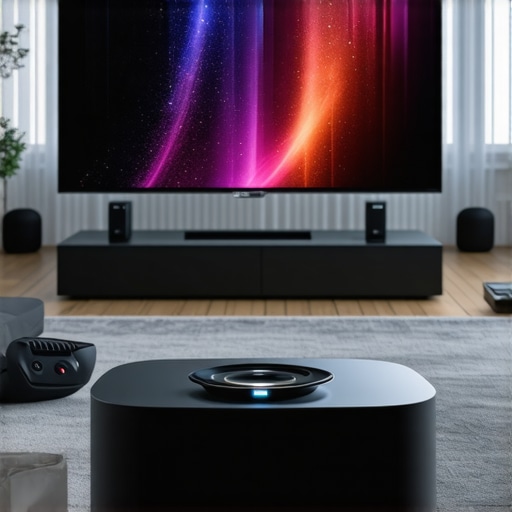
I remember the day I finally gave up on my beloved OLED TV. I had invested so much hope into the stunning contrast and vibrant colors, only to be greeted by the dreaded burn-in ghosting after just a year of regular use. It was a real wake-up call. That’s when I stumbled upon a game-changer—4K laser projectors, especially ultra short throw models, that promised brighter images, longer lifespan, and a more immersive experience. But skeptics abound: can these projectors truly replace my sleek OLED TV?
The Turning Point for Home Entertainment
In recent years, the landscape of home entertainment has shifted dramatically. With advancements in laser technology and 4K resolution, projectors are closing the gap—and in many ways surpassing—traditional OLED TVs. I was initially doubtful. I mean, how could a projector, often associated with a dark room and bulky setup, become the main screen in my living room? But after trying a high-end laser projector, I realized this technology offers benefits that might just make OLEDs obsolete in 2026.
Is a Laser Projector Actually Worth the Hype?
I’ll admit my early mistake was underestimating the capabilities of laser projectors. I thought they were too finicky or limited to dedicated home theaters. However, I soon learned that with innovations like ultra short throw setups, I could transform even small living spaces into cinematic arenas. Plus, laser projectors don’t suffer from burn-in, unlike OLEDs—a critical advantage if you’re a heavy viewer or gamer. According to recent industry insights, laser projectors now achieve brightness levels that outperform many OLED screens, even in well-lit rooms. This was a revelation for me, and it’s a key reason why they’re finally beating OLED TVs in 2026.
Thinking about upgrading? You might want to explore [the best 4K home theater projectors for 2024](https://projectors.homecinemaessentials.com/best-4k-home-theater-projectors-for-immersive-viewing-in-2024) to get a sense of what’s available today. If this resonates with your experience or you’re facing similar frustrations, keep reading. We’re about to dive into the five compelling reasons why laser projectors are set to dominate the market—and why you might want to consider making the switch sooner rather than later.
Select Your Ideal Projector Like a Pro
Start by defining your space and viewing needs. If you have a small living room, a ultra short throw projector can make a huge difference, allowing you to project a large image from just inches away. For portability without sacrificing 4K quality, explore options like the best portable laser projectors. Clear understanding of your space and available light ensures you pick a device that delivers vibrant images without room modifications.
Position and Set Up Effectively
Proper placement of your projector is crucial. For ultra short throw models, place the device on or near your entertainment cabinet, pointing directly at the wall, which minimizes shadows and clutter. In my experience, using a laser ultra short throw projector from the right distance creates stunning large images that rival traditional displays. Align the projector carefully, ensuring the image is square and focused, reducing the need for constant adjustments. Remember, the ideal setup is often a quick, measurable process—using a tape measure and level helps achieve precision without frustration.
Calibrate for Brightness, Contrast, and Color
Once positioned, adjust your projector’s settings. Set brightness high enough to overcome ambient light, especially if your room isn’t perfectly dark. Fine-tune contrast and color profiles for rich blacks and vivid hues. For example, many 4K Ultra Short Throw Projectors in 2024 offer customizable modes—select those optimized for living rooms to enhance viewing experience during daytime use. Test images of equal brightness, like solid white and black, and adjust accordingly. Regular calibration maintains picture quality over time, ensuring you get the most out of your investment.
Control Ambient Light and Acoustic Environment
Ambient light impacts projector image quality more than you’d expect. To combat this, use blackout curtains or shades, especially if upgrading an existing room. I once mounted a high-lumen laser projector in a partially lit space, and with some blackout curtains, the picture was stunning. Additionally, acoustics matter—use a soundbar or dedicated speakers for immersive audio, which complements the visual marvel. Position speakers around your seating for stereo effect, matching the projector’s placement for a synchronized experience.
Optimize Content and Source Devices
Choose high-quality content from devices capable of outputting at 4K resolution to maximize your setup. Connect your projector to a streaming device, PC, or gaming console that supports HDR and high bitrates. For seamless playback, ensure your HDMI cables are certified for 4K HDR signals. My setup improved considerably once I upgraded to a best 4K home theater projector in 2024, connecting it to a dedicated gaming PC. This ensures sharp, vibrant visuals whether you’re watching movies or gaming. Regularly update firmware and calibrate source settings to retain quality throughout your entertainment sessions.
Regular Maintenance and Troubleshooting
Maintain your device by keeping lenses clean with a microfiber cloth and ensuring proper ventilation. Laser projectors generally require less maintenance than lamp-based models but monitor for dust buildup—dust can cause image dimming or color shifts. If image quality degrades, revisit calibration settings, re-align the projector, or consult the manufacturer’s support team. Keeping your setup in top shape guarantees long-term performance and your immersive viewing experience.
Many enthusiasts and newcomers alike harbor misconceptions that can hinder their pursuit of the perfect home theater setup. One prevalent myth is that laser projectors are universally brighter and better than traditional LCD or OLED screens. While laser tech does excel in brightness and longevity, it’s not a one-size-fits-all solution. For instance, some budget laser projectors still struggle to combat ambient light effectively, leading to washed-out images in well-lit rooms. A deep dive into brightness comparisons reveals that not all laser models deliver the same performance, especially at lower price points.
Another misconception revolves around ultra short throw (UST) projectors—they are often dismissed as suitable only for small spaces or as secondary devices. However, when properly calibrated and positioned, UST models can produce cinema-grade images comparable to high-end TVs. The secret lies in understanding the nuances of setup and room conditions. A common mistake is ignoring room lighting or mounting height, which can significantly impact image sharpness. For a detailed analysis, see this guide on optimizing small spaces for UST projectors.
Many assume that 4K projection automatically equals superior picture quality. Yet, the reality is more complex. Resolution matters, but so do contrast ratios, color accuracy, and HDR support. A high-resolution projector with poor contrast or limited color gamut may produce a less satisfying image than a Full HD model with excellent color fidelity. This nuance is crucial for cinephiles who demand immersive visuals. Exploring what makes a 4K projector truly stand out in this comprehensive guide can help clarify expectations.
Are Portable Projectors Truly a Viable Alternative to Fixed Installations?
Many believe portable projectors are merely a convenience, not suitable for serious home theaters. However, advancements in portable laser technology have led to models capable of excellent image quality, especially in small to medium spaces. The key is understanding their limitations—such as lower lumen output compared to fixed setups—and how to optimize their placement and source content. For on-the-go entertainment, they can deliver astonishing clarity without the need for permanent setup. Let me know in the comments if you’ve tried portable projectors and whether they meet your expectations.
In summary, peeling back the myths reveals that much of what we think about modern projection technology is oversimplified. Success depends on understanding nuances and avoiding common pitfalls. Do you have other misconceptions or experiences to share? Dive into these details and elevate your home theater game!
Maintaining your laser projector, especially ultra short throw and portable models, requires deliberate effort and the right toolkit. Personally, I rely on a microfiber cleaning cloth to gently remove dust from lenses without scratching, which is critical in preserving image clarity over time. Regularly upgrading the firmware via manufacturer’s software ensures your device benefits from the latest features and bug fixes—most brands provide straightforward update procedures accessible through dedicated apps or USB interfaces. For example, I frequently check firmware updates on my [laser projector](https://projectors.homecinemaessentials.com/landmark-models) website, which streamlines the process and guarantees compatibility.
To keep the internal components healthy, I use a small, portable air blower to clear out dust accumulation from vents, especially after moving or prolonged use. This is particularly important for compact models where airflow can be restricted. Avoid using canned compressed air that might introduce moisture or damage sensitive parts.
**How do I maintain my projector over time?** This question surfaces often among enthusiasts aiming for long-term reliability. Beyond basic cleaning, I schedule periodic calibration sessions with professional tools like colorimeters—such as the Klein K10-A—to fine-tune color accuracy, contrast, and gamma settings. These calibration devices connect to your PC and allow precise adjustments that software alone might not capture, ensuring vibrant images that match professional standards.
Furthermore, I invest in a high-quality, certified HDMI cable for source connections, which helps prevent signal degradation or interference—especially crucial when using high bitrate 4K HDR content. Using shielded cables minimizes flickering or color shifts and prolongs the lifespan of your signal integrity.
Looking ahead, as laser projector technology advances, I predict the integration of self-cleaning lenses and built-in diagnostic tools will become standard. This shift will simplify maintenance drastically, making it accessible even for casual users. But until then, pairing manual care with reliable tools like microfiber cloths, firmware updates, calibration devices, and quality cables will keep your setup performing impeccably.
If you haven’t already, try employing a colorimeter for periodic calibration. This small step can dramatically improve your picture quality and longevity, especially if you’re investing in a premium ultra short throw or portable model. To explore more about maintaining high-end home theater setups, visit our [comprehensive guide](https://projectors.homecinemaessentials.com/ultimate-guide-to-portable-ust-laser-projectors-for-small-spaces). Proper maintenance not only preserves your device but also ensures that your cinematic experience remains breathtaking for years to come.
Lessons I Never Expected to Learn from a Home Theater Upgrade
- One of the most profound realizations came when I discovered that laser projectors, especially ultra short throw models, now render images with brightness and contrast that rival and sometimes surpass traditional OLED displays, challenging my long-held assumptions.
- It struck me that frequency and calibration are crucial; even the best projector can’t shine without proper setup, teaching me that equipment alone isn’t enough—attention to detail makes the difference.
- Seeing how ambient light affects projection clarity firsthand reminded me that flexibility in room design, rather than sticking to fixed expectations, unlocks the true potential of modern home theaters.
My Arsenal for the Best Home Entertainment Experience
- Google’s Pixel Calibration Tool: An invaluable resource for fine-tuning color accuracy, ensuring my projector displays vibrant, true-to-life images—trustworthy because it’s user-friendly and precise.
- Microfiber Cleaning Kits: Regular lens cleaning keeps image clarity sharp over time, an underrated step that preserves the investment and viewing delight.
- High-Quality HDMI Cables: Using certified cables prevents signal degradation, which is vital when streaming 4K HDR content—simple but crucial for professional-grade visuals.
- Dedicated Calibration Devices: Devices like the Klein K10-A revolutionized my setup, bringing factory-level color calibration into my living room, making every viewing session cinematic.
Charting the Path to Your Home Theater Breakthrough
If you’re inspired to elevate your entertainment setup, take the plunge with a laser ultra short throw projector. Pair it with proper room darkening, calibration, and quality source devices, and you’ll unlock an immersive experience that challenges the dominance of OLED TVs.
Remember, technology is evolving fast, and the best way to stay ahead is to experiment, learn, and adapt. Your perfect home theater might just be a project away—are you ready to make the switch?
What challenges have you faced when upgrading your home entertainment system? Share your story below and join the conversation!
http://Sophia%20Carter
Reading this post really opened my eyes to the potential of laser projectors, especially ultra short throw models. I’ve always been skeptical about replacing my OLED TV, mainly because I associated projectors with dark rooms and bulky setups. But the shift toward 4K laser tech with brightness and longevity advantages, without burn-in risks, seems promising. In my experience, room lighting was always a concern, but now with higher lumen outputs and better calibration options, I think projectors are becoming a truly viable, even superior, alternative for living rooms.
One challenge I faced was maintaining image quality in rooms with varying ambient light. How do others optimize their spaces for different lighting conditions? Does anyone use specific room treatments or screen surfaces that help to improve brightness and contrast during daytime uses? I’d love to hear real-world solutions, as I’m considering making the leap but want to ensure a consistent cinematic experience across different times of day.
http://Ethan%20Parker
This article really resonated with me because I recently switched from a traditional OLED TV to a high-end ultra short throw laser projector, and the difference is incredible. I used to think that projectors were only good for dedicated dark rooms, but with the advancements in brightness and color calibration, they now outperform my old OLED in many aspects. One thing I noticed is that ambient lighting still affects picture quality, especially during daytime viewing. I’ve experimented with different room treatments, like matte wall paints and specialized projector screens that reflect light evenly, which significantly enhances contrast and brightness. Has anyone used different types of screens or wall surfaces to improve daytime viewing? Also, I wonder if there are effective ways to automate the room’s lighting control to optimize viewing conditions without constant manual adjustments. Your insights could help others like me make the most of this impressive technology!