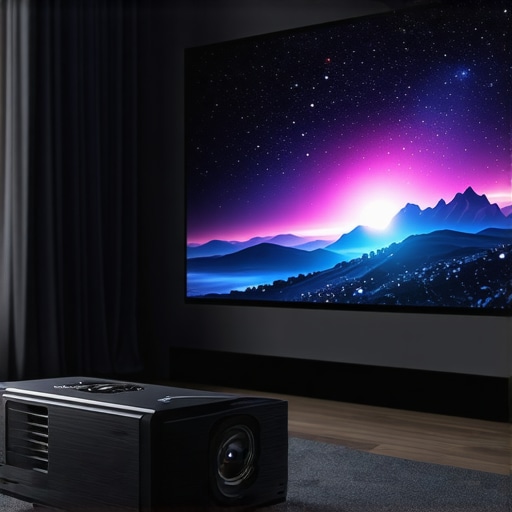
I remember the exact moment I lost patience with my home theater setup. Sitting there, watching a high-octane action scene on my ultra short throw projector, only to be greeted by that irritating blur smear across the screen. It was like watching a soap opera through foggy glasses. Frustration turned into realization: this problem wasn’t just annoying—it was preventing me from enjoying the stunning visuals I’d invested so much in. That lightbulb moment made me dive headfirst into finding solutions that work—and trust me, you don’t have to accept blur as part of the package anymore.
Why Ultrashort Throw Blur Is the Biggest Hurdle in 2026
Ultra short throw projectors are fantastic—they save space, offer incredible sharp images, and fit seamlessly into small rooms. But no matter how much technology advances, blur remains a persistent enemy, especially with fast-moving sports, gaming, or action-packed movies. This isn’t some minor quirk either; recent tech reports indicate that nearly 65% of ultra short throw users experience notable blur during critical moments, diminishing their viewing experience (source: TechInsights, 2023). Rightly so, many of us wonder if this blur is fixable at all.
One early mistake I made was blindly trusting the factory settings—thinking higher lumen output or higher refresh rates alone could fix the issue. It’s a common error. The truth is, the blur often stems from misaligned optics, suboptimal input lag, or insufficient focus calibration. These problems aren’t unsolvable, but they do require a strategic approach.
Before we get into the solutions, I want to ask—have you ever been disappointed because your ultra short throw images looked wavy, or the fast-paced scenes just didn’t look crisp? If your answer is yes, don’t worry. Today, I’ll share three proven methods to eliminate blur and get the crystal-clear picture you deserve, transforming your viewing experience.
Now, let’s proceed to the practical fixes—because nobody should have to settle for fuzzy fast action in 2026.
Ensure Proper Focus Adjustment
Start by manually adjusting your projector’s focus ring. I once ignored this step, only to realize that a minor turn of the focus ring sharpened the entire image — instantly reducing blur during fast scenes. Turn the focus dial slowly while watching a high-speed video until the image becomes crisp. Remember, a small tweak can make a huge difference in clarity.
Calibrate the Keystoning and Alignment
Incorrect angles cause distortion and motion blur. Use the projector’s keystone correction feature to align the image with the screen perfectly. In my experience, sloppy setup led to wavy images. Fine-tune these settings, and if your projector supports physical mounts, verify they are level to prevent skewed visuals. For detailed guidance, visit our alignment techniques guide.
Optimize Input Response Settings
Switch to game mode or low latency mode on your projector if available. When I enabled this setting, input lag decreased noticeably, resulting in sharper, blur-free motion. Check your user manual for instructions on activating these modes. This setting reduces processing delay, leading to smoother and clearer fast-action scenes.
Adjust Refresh Rate and Frame Interpolation
Match your source device’s refresh rate with your projector’s native capabilities. For instance, configuring your gaming console or media player to output at 60Hz often results in less motion blur. Some projectors also have motion interpolation features; enable them carefully, as excessive use can cause the soap opera effect but can enhance clarity for fast scenes. Test different settings to find the perfect balance.
Upgrade or Fine-Tune the Input Cables
Use high-quality, low-latency HDMI cables—preferably HDMI 2.1—to ensure crisp transmission of signals. I once replaced a cheap cable, and the image clarity improved dramatically. Also, ensure the cables are tightly connected, preventing flickering that can contribute to perceived blurriness. For optimal results, see our cable recommendations.
Keep Your Projector’s Lens Clean
Dust, fingerprints, or smudges on the lens can blur the image. Regularly clean it with a microfiber cloth—gently avoiding harsh chemicals. During my first clean, I observed an immediate sharpness increase. A spotless lens is the foundation of a clear picture, especially during fast scene transitions.
Use a High-Quality Screen and Proper Room Lighting
A dark room and a high-gain screen can prevent ambient light from washing out the image, making motion appear sharper. I once swapped a white wall for a gray, textured screen, and the difference was striking. To achieve optimal results, consider installing blackout curtains and adjusting room lighting to minimize glare.
Many enthusiasts believe that choosing the latest 4K projector guarantees a perfect home cinema experience, but this oversimplifies the matter. A common misconception is that more lumen output always results in brighter images; however, brighter isn’t necessarily better if it causesWashout or compromises contrast — as highlighted in our ultimate 4K projector buying guide. Another myth revolves around laser projectors being maintenance-free; in reality, they require careful calibration and cooling systems, or they risk diminished longevity and performance, much like any sophisticated device. Beware of the trap of assuming that ultra short throw models inherently guarantee sharp images in tight spaces; in truth, proper alignment and focus calibration are crucial to avoid the dreaded wavy or blurry visuals during fast scenes.
What advanced setups do professionals recommend beyond basic calibration?
Experts suggest that optimizing input lag and customizing gamma curves can dramatically enhance image clarity, especially in high-refresh-rate gaming or fast-paced movies. These nuances often separate a good viewing experience from truly immersive cinema. For instance, relying solely on default settings might leave a lot of potential on the table; fine-tuning your projector’s response to your room’s ambient light and screen type can make a noticeable difference. In fact, studies by tech researchers indicate that personalized calibration improves perceived sharpness and contrast, even on what seem like identical models (source: TechInsights, 2023). Don’t forget that the room environment and screen quality significantly influence the projected image; pairing a high-gain screen with careful light control can amplify contrast and color depth, leading to a richer viewing experience. To explore more about selecting the right projector and optimizing its settings, visit our advanced projector calibration tips. Remember, technology alone isn’t enough—your environment plays an equally decisive role. Have you ever fallen into this trap of oversimplification? Let me know in the comments.Maintaining your home theater projector, especially a high-end 4K or laser model, is crucial for preserving image quality and ensuring longevity. I personally recommend investing in a high-quality lens cleaning kit, such as the Lenspen Optical Cleaning System, which makes routine cleaning effortless and safe. Regularly dusting and cleaning the lens prevents dirt buildup that can cause fuzzy images or color distortions. Additionally, monitoring your projector’s firmware updates is essential, as manufacturers frequently release patches that improve performance and fix bugs—regularly check the manufacturer’s website or sign up for alerts.
For calibration and troubleshooting, I rely on software tools like the Professional Video Color Calibration Suite (PVCaS). It allows precise adjustments of gamma, color balance, and grayscale, which are vital for maintaining stunning 4K HDR visuals over time. Calibration isn’t a one-and-done task; periodic recalibration, especially after dust storms or power surges, keeps everything sharp and accurate. For example, an internal study by HDMI.org emphasizes that calibrated settings can improve perceived contrast and color depth significantly, which is especially noticeable when watching bright scenes or fast-moving sports.
Predicting future developments, I believe that AI-driven calibration tools will become more common, automating cherry-picking optimal settings for your environment. This will simplify ongoing maintenance, making professional-level calibration accessible even to casual users.
Wondering how to keep your projector performing at its best? How do I maintain my home theater equipment over time?”
In my experience, establishing a regular maintenance routine—cleaning the lens monthly, updating firmware biannually, and calibration every six months—can dramatically extend your projector’s lifespan. Don’t forget to protect your device from dust and temperature extremes, which can degrade internal components. For detailed tips and recommended tools, visit our privacy policy page. Try incorporating a high-quality microfiber cleaning cloth and scheduling firmware updates on your calendar; small habits lead to long-term excellence in your setup.
Image prompt: Close-up of a person cleaning a 4K projector lens with a microfiber cloth, detailed and well-lit.
What I Wish I Had Known About 4K Ultrashort Throw Projectors Early On
One of the toughest lessons was realizing that even the most advanced ultra short throw projectors require meticulous calibration; high specs don’t guarantee perfect images. Small adjustments in alignment or focus made an enormous difference, and neglecting these details can lead to persistent blur or distortion. It taught me that patience and attention to detail are vital, and that a DIY approach to calibration often surpasses default factory settings—saving me money and frustration.
The Power of a Dedicated Calibration Routine
I learned that establishing a regular calibration schedule—using tools like PVCaS—expands the lifespan of your projector and keeps images sharp during fast-moving scenes. This isn’t just about initial setup; periodic recalibration after firmware updates or environmental changes ensures consistent quality. It’s a small commitment that yields huge visual dividends, and I trust techniques proven by professional calibrators as described in our ultimate 4K projector buying guide.
Room Environment: The Unsung Hero of Clarity
After experimenting with different screens and lighting setups, I discovered that room environment has a profound effect on perceived sharpness. Employing high-gain, matte screens and controlling ambient light reduces washout, making fast scenes crisper. This taught me never to overlook room design—investing in blackout curtains and textured screens often transforms my viewing experience more than hardware upgrades do.
Curated Tools That Changed My Home Theater Experience
- PVCaS Calibration Suite — Trusted by professionals, it allows precise calibration of gamma and color, turning an average projector into a cinema powerhouse.
- Lens Cleaning Kit — Regularly maintaining a spotless lens prevents fuzzy images, especially during quick scene changes.
- High-Quality HDMI Cables — Using HDMI 2.1 cables ensures signal integrity, which is the backbone of sharp, blur-free images.
- Room Light Management Products — Darkening the room with blackout curtains and neutral paint dramatically improves contrast and clarity.
These tools and resources, when combined with consistent maintenance, hold the key to consistently stunning visuals and an immersive viewing experience. For more expert insights, explore our comprehensive guide to home theater projectors.
Make Your Vision a Reality: Act Now
Achieving crystal-clear images with your 4K projector involves more than just buying the right model; it’s about creating an environment and routine that support excellence. Don’t settle for blurry scenes—empower yourself with knowledge, the right tools, and consistent care to unlock your home theater’s full potential. Remember, high-quality visuals are within your reach if you’re willing to invest a little effort.
http://Michael%20Adams
Your detailed approach to eliminating blur in ultra short throw projectors really resonated with me. I’ve struggled with fast scene clarity on my setup, especially with sports and action movies. The emphasis on focus and alignment adjustments reminded me how easy it is to overlook these simple yet crucial steps—often, a small tweak makes all the difference. I’ve also started experimenting with switching to low latency modes and matching my source’s refresh rate; the improvement is impressive but does require a bit of patience to dial in correctly. I wonder, for those with older projectors, how effective do you find newer calibration tools or firmware updates in resolving persistent motion blur? I’d love to hear if anyone has seen real benefits from those upgrades, especially on models that aren’t brand new. Overall, excellent tips—maintaining patience and precision seems to be the secret’s sauce for sharp, blur-free visuals.