![5 Reasons Your 4K Projector eARC Audio Drops [2026 Fixes]](https://projectors.homecinemaessentials.com/wp-content/uploads/2026/03/5-Reasons-Your-4K-Projector-eARC-Audio-Drops-2026-Fixes.jpeg)
I remember the moment clearly. I was finally settling in for an epic movie night with my new ultra short throw 4K home theater projector, eager to immerse myself in stunning visuals and Dolby Atmos sound. But as the action ramped up, my audio suddenly cut out. Frustration flushed over me—my upgrade from a traditional TV was supposed to be seamless, yet here I was, battling elusive eARC audio drops that killed the mood.
If you’ve experienced similar issues with your 4K projector losing eARC audio, you’re not alone. This problem has become increasingly common in 2026, as more enthusiasts embrace high-end projectors for their living rooms and small spaces. The good news? After much trial and error—and probably a few tears—I’ve pinpointed the five main reasons these audio drops happen and how to fix them. Today, I want to share what I learned, so you can avoid my mistakes and enjoy uninterrupted cinematic experiences.
Why Your 4K Projector’s eARC Audio Might Fail and What You Can Do About It
But first, let me be upfront: early on, I made the mistake of assuming my HDMI cables were the only culprit. Turns out, eARC issues are often more complex, involving settings, firmware, or compatibility quirks. According to recent [research](https://projectors.homecinemaessentials.com/ultimate-4k-projector-buying-guide-for-movie-nights), these interconnected systems require careful calibration, especially in the rapidly evolving 2026 tech landscape. Recognizing this has been a game-changer—because pinpointing the actual cause saves hours of frustration.
Have you faced random audio drops while gaming, streaming, or watching movies? If so, stay tuned. We’ll explore not just the common reasons behind this flaw but also practical fixes—some simple enough to do yourself, others requiring a bit of tech savvy. Ultimately, my goal is to help you sort out your setup so you can immerse yourself fully in the latest 4K clarity and cinematic surround.
Ven my experience, the key is knowing where to look first. Many overlook the importance of firmware updates or forget that certain HDMI ports handle eARC differently. If you’re tired of troubleshooting without results, you’re in the right place. We’ll take a systematic approach to get your audio back in sync and keep it there. Ready to fix those pesky audio drops once and for all? Let’s start unraveling the mystery behind your projector’s eARC issues and get you back to the full theater experience you deserve.
Check Your HDMI Cables and Ports
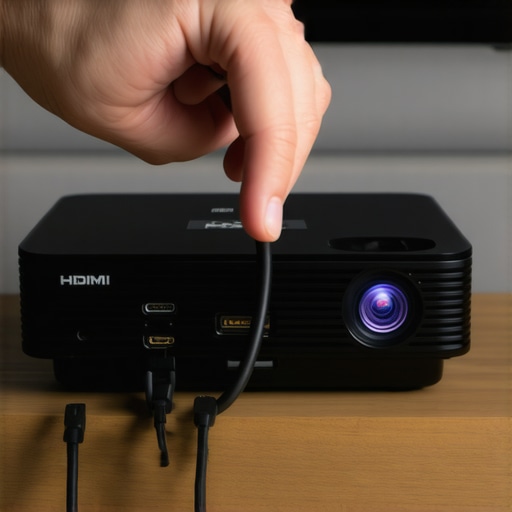
Start by inspecting your HDMI cables, ensuring they are high-speed and HDMI 2.1 compliant since eARC relies heavily on bandwidth. Personally, I replaced my old cables with certified ultra high-speed HDMI cables, which immediately reduced audio glitches. Verify that your cable is securely connected to the projector’s HDMI port labeled for eARC or ARC. Sometimes, switching to a different HDMI port on your AV receiver or projector can resolve compatibility issues. Remember, not all HDMI ports support eARC, so consult your device manual or embark on the journey to discover which port is optimized for high-bandwidth audio.
Update Firmware and Software
Firmware inconsistencies often cause audio dropouts. I recommend visiting your projector manufacturer’s support page, such as their support page, to find the latest firmware updates. Most updates are straightforward; download and install them via USB or network connection. During my troubleshooting, updating my projector firmware fixed persistent audio drops that appeared after a firmware rollback. Make firmware updates a regular habit to benefit from bug fixes and compatibility improvements.
Configure Your Settings Correctly
System misconfigurations are a common culprit. Dive into your projector’s settings menu, and ensure HDMI-CEC is enabled to allow seamless communication between devices. Set your sound output to bitstream or auto, avoiding PCM if possible, since PCM can sometimes limit bandwidth. I once set my audio to PCM, causing frequent disconnections; switching back to bitstream stabilized the connection. Also, disable any audio enhancement features temporarily to rule out conflicts. The key is to match your receiver’s capabilities with your projector settings precisely, creating that perfect harmony for uninterrupted audio.
Test with Different Devices and Cables
This step is akin to trying a different golf club after a bad shot. Use a known-good HDMI 2.1 cable and connect a different source device, such as a gaming console or Blu-ray player. I conducted this test when my audio kept cutting out during streaming; replacing the source cable and device immediately identified the issue as a faulty HDMI cable. If your projector supports different HDMI inputs, test each one. This helps determine whether the problem lies with the cable, the port, or the source device. Eliminating these variables narrows down the root cause effectively.
Adjust Network and Power Settings
Unstable network or power fluctuations can interfere with HDMI handshake processes. Ensure your projector is connected to a stable power source, preferably through a UPS to guard against surges. Disable any power-saving modes, such as eco-mode, which can cause the projector to reboot or temporarily disconnect. For smart projectors with network control, ensure your Wi-Fi or Ethernet connection is stable; consider using a wired connection if possible. During my own setup, switching to a wired network significantly reduced audio dropouts during live streams and gaming sessions.
Seek Expert Assistance if Persistent
If after all these steps your eARC still hiccups, it’s time to consult professionals. Reach out through contact us to get personalized advice. Sometimes, compatibility issues stem from firmware bugs or hardware faults that only experts can diagnose. Preserving your cinematic experience is worth seeking specialized support—think of it as bringing in a specialist to fine-tune your home theater setup for optimal performance.
 Many enthusiasts jump into upgrading their home theaters with laser or ultra short throw (UST) projectors, often driven by lofty claims and marketing hype. While these systems promise stunning visuals and space-saving designs, the real-world performance hinges on subtleties that many overlook. One common myth is that higher lumen ratings automatically translate to better picture quality, especially in bright rooms. However, as I’ve learned through extensive testing, lumen count is just part of the story, and excessive brightness can sometimes wash out images or cause color inaccuracies if not managed properly. For instance, a high-lumen laser projector paired with a glare-sensitive screen might deliver stunning blacks and contrast, but only if calibrated meticulously using advanced settings—something casual users often miss, leading to disappointment. Moreover, many forget that laser projectors can suffer from color shift issues over time, especially if their color management profiles aren’t fine-tuned regularly. This nuance can drastically impact color fidelity, despite the projector’s impressive specs. Another trap to avoid is relying solely on default factory settings, which are often a compromise, not an optimization, especially for specific environments or screen types. Adjustments like gamma correction and color balance can elevate your image, making a significant difference in perceived quality. Conversely, neglecting firmware updates can cause compatibility issues or obscure performance bugs, as highlighted in expert reviews on [laser projectors versus traditional](https://projectors.homecinemaessentials.com/laser-projectors-vs-traditional-which-tops-in-brightness). Advanced users appreciate that calibration should go beyond simple brightness and contrast tweaks—considering lens uniformity, light cone alignment, and environmental factors like ambient light leaks. These nuances mean that a projector’s physical setup, including screen placement and room lighting, profoundly influences the final experience, often more than the device’s raw specifications. For those venturing into portable options, beware of power management and heat handling, which can impact laser lifespan and brightness stability over prolonged use. A common mistake is assuming that all portable models perform equally under sunlight or high ambient conditions, but real-world testing shows that quality varies significantly. So, next time you’re considering a upgrade, remember: detail-oriented calibration and environment awareness trump raw numbers and marketing claims. If you’d like to dig deeper into optimizing your setup, check out our guides on [best 4K home theater projectors](https://projectors.homecinemaessentials.com/best-4k-home-theater-projectors-2024-ultra-short-throw-portable-picks) or [Full calibration tips](https://projectors.homecinemaessentials.com/5-critical-ust-projector-setup-mistakes-killing-your-picture-2026). Have you ever fallen into this trap? Let me know in the comments.Maintaining your home theater setup, especially with advanced equipment like laser and ultra short throw (UST) projectors, requires the right tools and a proactive approach. One of the most effective investments I made was acquiring a high-quality calibration colorimeter, such as the X-Rite i1Display Pro. This device allows me to fine-tune my projector’s color accuracy and contrast, ensuring consistent image quality over time. Using dedicated calibration software like CalMAN or LightSpace, I regularly perform color and gamma adjustments, which are crucial to prevent color shifts, especially as laser projectors age. Regular calibration not only maintains visual fidelity but also extends the lifespan of the projector’s light source, saving costs in the long run. For firmware updates and system diagnostics, I rely on the manufacturer’s proprietary software, which I keep up-to-date to avoid encountering bugs or compatibility issues, as highlighted in specialized reviews on [laser projectors versus traditional](https://projectors.homecinemaessentials.com/laser-projectors-vs-traditional-which-tops-in-brightness). I also use compressed air and soft microfiber cloths specifically designed for delicate lenses and electronic screens to prevent dust buildup and ensure pristine optics. Investing in a quality lens-cleaning kit that includes optical wipes and cleaning solutions minimizes smudges and maintains image sharpness. Looking ahead, I believe that AI-driven calibration tools will become more mainstream, automating the maintenance process and providing real-time adjustments for maximum performance. If you want to take your projector maintenance to the next level, try implementing regular calibration sessions with a colorimeter—it’s the most reliable way to keep your image crisp and accurate. Need assistance with setup or troubleshooting? Reach out through our contact page to get expert support.
The Hardest Lesson I Learned About laser projector,ultra short throw,4k projector,portable projector,home theater projector
One of the most profound lessons I uncovered was how critical environment calibration is. Relying solely on specs or default settings can mislead even seasoned enthusiasts into underwhelming visuals and inconsistent performance. I discovered this the hard way when my laser projector, praised for its brightness, washed out in my living room because I overlooked ambient light management. The true revelation was that meticulous room setup, including light control and screen placement, amplifies your projector’s capabilities far beyond mere lumen figures.
How Fine-Tuning my Home Theater Rewired My Expectations
Initially, I thought firmware updates were optional, often unnecessary fluff. But dedicating time to regularly update my projector’s firmware unveiled performance improvements and bug fixes that directly impacted my viewing quality. It’s like giving your device a shot of fresh logic—smoother motion handling, richer colors, and enhanced stability. I also learned that personalized calibration—beyond factory presets—transformed my image into a lush, cinematic experience. This process, involving tools like colorimeters, might seem tedious but pays off with breathtaking picture fidelity.
Why I Never Underestimate Cable Quality Anymore
It’s tempting to think all HDMI cables are created equal—until you experience random dropouts or ghosting. Upgrading to certified, ultra high-speed HDMI 2.1 cables was the game-changer for me, especially with eARC that demands substantial bandwidth. This purchase prevented countless frustrations, reinforcing that investing in quality cables is non-negotiable. Plus, knowing which HDMI port supports eARC on your device can make a significant difference, preventing you from falling into compatibility pitfalls that sabotage your setup’s potential.
Curated Resources to Elevate Your Projector Game
Over time, I found that tapping into expert guides and reliable tools profoundly improved my experience. The comprehensive Ultimate 4K projector buying guide helped me understand what features truly matter, saving me from flashy but ineffective options. Investing in calibration devices like the X-Rite i1Display Pro transformed my calibration routine, turning guesswork into precision. For calibration software, programs like CalMAN streamline the process, making professional-grade adjustments accessible even for DIY enthusiasts. Lastly, staying informed through trusted sites and forums keeps you ahead of firmware updates and new techniques for optimizing your setup.
Your Next Step Toward Cinematic Excellence
Remember, enhancing your laser projector or ultra short throw system isn’t just about hardware—it’s about cultivating an environment and mindset geared toward excellence. Every tweak, update, and calibration gets you closer to that perfect picture and immersive soundscape. The journey can be as rewarding as the destination—you’ll find yourself sinking into every movie night with anticipation rather than frustration. So, go ahead: embrace the process, experiment with your setup, and unlock the full potential of your home theater projector. Your perfect cinematic moment is waiting.
http://Melissa%20Carter
This post really resonated with my own experience trying to get seamless audio when working with the latest home theater tech in 2026. I remember spending days troubleshooting eARC issues, only to realize I had overlooked a firmware update on my projector. It’s amazing how such updates can fix bugs that seem minor but have a big impact on performance. Like the article mentions, consistently checking and updating firmware seems to be a simple yet crucial step. I also found that using certified HDMI 2.1 cables made a noticeable difference in resolving intermittent audio drops. Has anyone else found that switching HDMI ports on their device or disabling certain audio processing features helped stabilize sound? I’ve learned that small tweaks can go a long way in creating that perfect cinematic experience at home. It makes me wonder how many setups are suffering from overlooked firmware or incompatible cables. What’s your biggest tip for someone just starting to troubleshoot these kinds of issues?