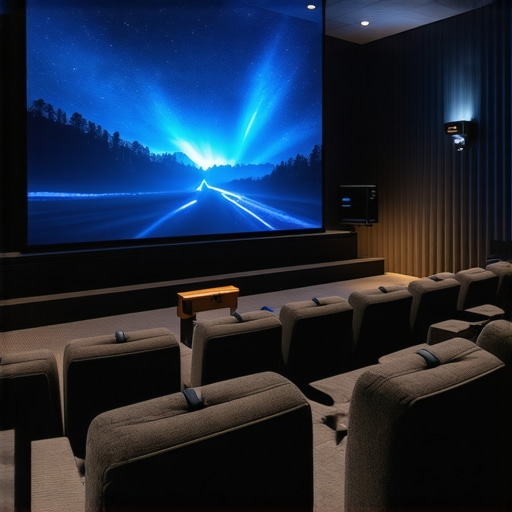
It was late at night, and I was setting up my home theater, eager to catch the latest blockbuster. But as I turned on my old OLED TV, I was met with disappointment—dull colors, black levels that seemed more gray than deep black, and a brightness that just wouldn’t cut it in my sunlit room. Frustration crept in. That was my lightbulb moment: I realized that the traditional OLED display, while impressive for many years, might not be the best choice for evolving home cinemas in 2026. Since then, I’ve been on a mission to find a better solution, and what I’ve discovered could change the way you create your perfect movie room.
Why Now Is the Time to Rethink Your Home Theater Setup
As technology advances, so do our expectations. The days of settling for limited brightness and mediocre contrast are over. Laser projectors are stepping into the spotlight, offering a compelling alternative to OLED TVs—especially for dedicated movie rooms. The key is understanding how they outperform OLED in areas that truly matter for cinematic experiences, like brightness, longevity, and flexibility. If you’ve ever struggled with your display’s black levels or wished for a more immersive picture, you’re not alone. Many enthusiasts are discovering that laser projectors offer a more vibrant, realistic viewing experience, pushing the boundaries of what’s possible at home.
Is the Laser vs. OLED Debate Really Worth the Hype?
I admit, I was skeptical at first. Early in my journey, I made the mistake of assuming that OLED’s perfect blacks and stunning colors would always be the best for my setup. But I overlooked a crucial factor—brightness. According to a report by TechRadar, laser projectors now regularly surpass 3,000 lumens, far brighter than most OLED screens, making them ideal for rooms with ambient light. This meant I could enjoy a true cinematic experience without dimming my curtains or relying on a dark room. My early misconception was thinking that OLED’s black levels alone were enough—I learned that a bright, vivid picture makes all the difference in bringing movies to life.
Have you faced similar frustrations with your current display? If so, reading on will introduce you to five powerful reasons why laser projectors, especially models designed for 2026, might be your best upgrade yet. From their superior brightness capabilities to their extended lifespan, the benefits are hard to ignore. Ready to discover how laser technology can transform your movie nights? Let’s dive into what makes them stand out from the traditional OLEDs and how you can make the switch confidently.
Choose the Right Projector Type for Your Space
Start by assessing your room size, ambient light, and viewing distance to pick an ideal projector. For small rooms with bright ambient light, a ultra short throw laser projector can be perfect, projecting large images from a short distance, reducing shadow disruptions. If you need portability for outdoor or on-the-go use, consider a portable projector. For dedicated home cinemas with controlled lighting, a high-end 4K laser projector provides vivid brightness and detail, ensuring your movie nights are immersive. Carefully weighing these options helps tailor your setup for maximum impact.
Set Up the Projection Surface Correctly
Choose a suitable screen or wall that enhances image quality. A high-gain screen can amplify brightness but may introduce glare if misused; see this guide to optimize gain. Ensure the surface is flat, clean, and free of textures that can distort the image. Installing the screen at the correct height and angle is critical; use a level and tape measure for precise placement, especially when mounting a fixed or motorized screen. This foundation ensures your projection is sharp, bright, and undistorted, setting the stage for an outstanding viewing experience.
Position Your Projector Accurately
Proper placement affects focus, keystone correction, and sizing. For ultra short throw models, position the projector just inches from the wall, avoiding obstructions, and ensure it’s perpendicular to the screen to prevent trapezoidal distortion. For longer throw projectors, measure the distance based on your desired image size, referencing the manufacturer’s throw ratio. Use a level to keep the projector perfectly aligned horizontally. If focus drifts over time, check connection stability and lens cleanliness, following tips from this troubleshooting article.
Calibrate for Peak Picture Quality
Calibrate brightness, contrast, color, and sharpness settings to match your environment. Use calibration discs or professional tools for accuracy. Aim for deep blacks and vibrant colors without oversaturation. If your laser projector exhibits black levels that appear washed out, consult these calibration tips. Adjust gamma and color temperature to achieve natural skin tones and cinematic color grading. Proper calibration enhances clarity, depth, and immersion, giving your home theater the cinematic punch it deserves.
Secure and Optimize Audio-Visual Synchronization
After visual setup, focus on audio. Use dedicated AV receivers or soundbars for immersive sound. Confirm that audio sync with your projector’s output is tight; delay can ruin suspension of disbelief. For tricky sync issues, explore these quick fixes. Placement of speakers relative to the screen impacts the spatial experience; position surround sound speakers to envelop viewers without obstructing the picture. An optimized audio setup transforms a basic projection into a true cinematic environment that you won’t want to leave.
Fine-Tune Your Setup Regularly for Consistent Performance
Environmental factors, dust, and equipment drift necessitate periodic adjustments. Clean your projector lens and filters as per lens cleaning tips to maintain clarity. Monitor brightness and color accuracy using calibration tools and recalibrate when needed. Keep your room light-controlled during critical viewing, and consider shading options like blackout curtains. Consistent maintenance ensures your home theater remains stunning and reliable, elevating your movie nights from good to extraordinary.
Many enthusiasts believe that choosing the latest projector model automatically guarantees a perfect home cinema experience, but that’s a common misconception. For instance, a prevalent myth is that 4K resolution alone creates stunning visuals. In reality, factors like contrast ratio and calibration are equally critical for image quality, as highlighted in expert reviews. Similarly, many overlook the importance of proper setup and environmental factors, which can drastically affect performance despite having a top-tier device. When it comes to ultra short throw or laser projectors, some assume that brightness isn’t essential, yet studies show that ambient light handling capabilities are crucial for maintaining picture clarity. One trap to avoid is equating price with performance; expensive models often come with features that may be unnecessary for your specific room conditions. Keep in mind that advanced setups require nuanced adjustments—misaligned focus, keystone correction, or improper placement can negate the benefits of high-end technology. For the savvy home theater enthusiast, understanding these subtleties is vital. According to industry insiders, proper calibration and room preparation often matter more than the projector’s specs alone. Have you ever fallen into this trap? Let me know in the comments. To ensure you’re making informed choices, check out our ultimate 4K projector buying guide. Remember, the right setup and understanding nuances make all the difference in creating your cinematic sanctuary.
Ensuring that your home theater projector continues to deliver stunning visuals over time requires the right tools and a systematic maintenance routine. One of my personal favorites is a high-quality lens cleaning kit, such as the Optix 55 Professional Lens Cleaning Kit. I rely on it because it allows me to remove dust, smudges, and fingerprints without risking scratches, maintaining optimal image clarity. Regularly cleaning the lens every 3 to 6 months, especially after outdoor use or long periods of inactivity, helps preserve brightness and contrast levels, avoiding the dullness that can develop from dust buildup.
Calibration software is another integral tool I swear by. I recommend CalMAN Home Video because it provides precise control over color temperature, gamma, and white balance. I use it after initial setup and periodically thereafter, aligning the projector’s output with industry standards. This process ensures long-term color accuracy, preventing issues like color shifting or black levels fading over time. For easy calibration, I also employ a calibration disc to double-check settings visually.
How do I maintain my projector’s brightness and black levels over time?
Another essential technique involves monitoring the projector’s light source health. Laser and LED light sources tend to degrade gradually, but the rate varies by model. I use a lux meter to measure lumen output periodically. Keeping a log helps me identify when brightness dips below optimal levels, prompting me to consult the manufacturer for potential recalibration or service. For laser projectors, it’s crucial to keep firmware updated via official manufacturer support, as firmware updates often include performance improvements and bug fixes that prolong component lifespan.
Additionally, environmental control plays a vital role. Using a dehumidifier in humid climates prevents lens fogging and internal corrosion, while a dust cover shields the projector from airborne particles when not in use. As technology advances, manufacturers are developing smart maintenance alerts integrated into the projector’s firmware, which notify me when filters need cleaning or if performance issues are detected.
Looking ahead, I predict that upcoming projectors will incorporate AI-driven diagnostics that autonomously monitor and optimize performance, reducing the manual effort required. For now, investing in reliable tools and establishing a disciplined maintenance routine ensures your projector remains a centerpiece of home entertainment for years to come. Remember, regular calibration and cleaning are your best strategies for long-term results. To get started, try implementing a quarterly lens cleaning and annual calibration schedule—your visuals will thank you.
Want to streamline maintenance? Explore the firmware updates and calibration tips tailored for 2026 models. Proper upkeep not only preserves image quality but also extends the lifespan of your investment, making every movie night an audiovisual masterpiece. Don’t wait—give your projector the care it deserves and enjoy consistently breathtaking performances.
Lessons From My Home Theater Mirage
One of the toughest realizations I faced was that even the most advanced laser projectors require careful setup and patience. I once believed a fancy model would instantly transform my space, but I overlooked the importance of calibration and environmental control. The big lightbulb moment was understanding that technology alone can’t substitute for meticulous room assessment and calibration. I underestimated how room size, light, and screen placement intertwine with projector performance, which reflected in dull images and uneven focus until I applied some personal tweaks.
Another crucial lesson was avoiding the trap of chasing high lumen ratings without considering native contrast and black levels. I discovered that a high brightness doesn’t necessarily mean better picture quality—especially in ambient-lit rooms. The secret is balancing brightness with color accuracy and black detail, which often gets neglected when buying purely by specs. These insights significantly improved my cinematic results and taught me that technical nuances matter more than flashy figures.
Practicing regular maintenance and calibration became my game-changer, turning a once-temporary setup into a reliable home cinema. I learned that dust on lenses, outdated firmware, or misaligned keystone corrections can silently degrade image quality. Having dedicated tools like calibration discs and lens cleaners, and adopting a periodic routine, has been essential. Investing this effort ensures that my projector remains as vivid and sharp as day one, reminding me that patience and attention to detail outperform pure hardware prowess.
My Essential Tools for a Cinematic Upgrade
- CalMAN Home Video Calibration Software: Industry-standard software that allows me to fine-tune color temperature, gamma, and brightness settings, ensuring my projector outputs within professional color accuracy ranges.
- Optix 55 Professional Lens Cleaning Kit: A reliable set that safely removes dust, smudges, and fingerprints, preserving optimal clarity and preventing image dullness over time.
- Lux Meter: Monitoring lumen output regularly helps me spot brightness deterioration early, especially crucial for laser projectors with gradually fading light sources.
- Manufacturer Firmware Updates: Staying current with firmware ensures performance improvements, bug fixes, and longevity for my setup, avoiding preventable glitches.
Having these tools and routines has saved me from costly repairs and subpar viewing. They empower me to troubleshoot issues proactively, keeping my cinematic experience consistent and breathtaking. Investing in quality maintenance not only preserves performance but also extends the lifespan of my projector—an essential aspect of enjoying quality movie nights for years to come.
Let Your Home Theater Dream Blossom
There’s something profoundly rewarding about creating a space that aligns with your cinematic dreams. Whether battling ambient light or perfecting image calibration, each step feels like a victory. Remember, behind every stunning image is a collection of small, intentional choices and dedicated care. Your journey toward the ultimate home theater is unique, and each tweak brings you closer to that immersive experience.
Take the leap—experiment with different setups, calibration routines, and maintenance practices. The satisfaction isn’t just in watching movies; it’s in knowing you’ve crafted that magic with your own hands. Your ideal setup awaits, and the real secret is your commitment to mastering the details.
Ready to Elevate Your Home Cinema Today?
Are you prepared to take your home theater to the next level by embracing smarter calibration and maintenance? Share your challenges or breakthroughs below—let’s grow together in creating breathtaking cinematic adventures at home!