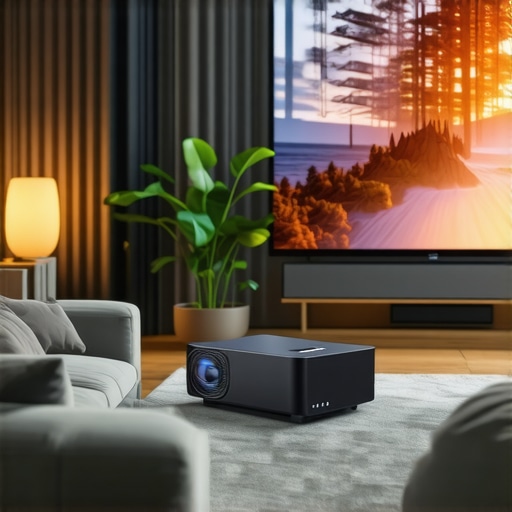
I remember the exact moment I realized my living room was too small for my beloved projector setup. The screen kept getting cut off, shadows danced in weird places, and I spent more time fiddling with cords than actually enjoying my favorite movies. It was a lightbulb moment—my space just wasn’t built for the traditional, bulky projectors I’d been eyeing. But then, I discovered something game-changing: portable and ultra short throw 4K projectors designed specifically for small spaces. Suddenly, my cramped apartment transformed into a cinematic haven, and I knew I wasn’t alone in facing this challenge.
Why Small Spaces Need a Smart Projector Solution
We all crave that big-screen experience, but not everyone has the luxury of a dedicated home theater room. Small apartments, cozy bedrooms, or even dorms—these spaces demand a different approach. The good news? The latest portable and ultra short throw projectors pack a punch, offering stunning 4K clarity without hogging your precious space. No more wrestling with giant screens or messy setups; these compact devices can turn even the tiniest corner into your personal cinema.
Is a Tiny Projector Actually Worth the Hype?
Early on, I made the mistake of dismissing compact projectors as gimmicks. I thought they’d compromise quality or be too dim to matter. Boy, was I wrong! With advancements like laser technology and improved brightness, today’s portable projectors rival traditional ones in picture quality. Still, skepticism remains—can a small device really deliver that immersive experience? We’ll explore that in detail, but my experience has shown that, when chosen wisely, these projectors can truly impress. Curious? Check out how ultra short throw projectors can seamlessly fit into your small space by visiting this guide.
If you’re tired of struggling with bulky setups or settling for subpar visuals, stick around. I’ll walk you through exactly how to find the perfect portable or ultra short throw 4K projector that transforms your cramped space into a cinematic paradise. Ready to dive in? Let’s get started and turn your small space into a big-screen haven.
Pick the Right Projector for Your Space
Start by assessing your room’s dimensions and lighting conditions. For small, bright spaces, opt for projectors with high lumen output, ideally 2000 lumens or more, to ensure clear visuals even during the day. When I upgraded my tiny apartment setup, I chose a portable laser projector with 2500 lumens, which made a noticeable difference compared to my old, dimmer model. Check out this comparison to understand brightness differences.
Measure Your Space Precisely
Use a tape measure to determine the distance from where you plan to place the projector to the wall or screen. Ultra short throw projectors are designed to sit just inches away from the surface, but each model has a different throw ratio. I remember spending an afternoon testing different spots in my bedroom, mapping out the perfect corner where the projector barely peeked out but still projected a crisp 100-inch image. This step is crucial—if you get it wrong, your picture might be blurry or miss parts of your wall.
Set Up Your Projector Correctly
Once you’ve selected your spot, position the projector accordingly. For ultra short throw models, place the device within 4-12 inches of your wall. Use a level to ensure the projector is perfectly horizontal; a tilted projector causes keystone distortion. I used a small level on top of my projector and adjusted its position until my image was perfectly rectangular. Remember, a stable surface prevents vibrations that can blur the image. If you need help with placement, contact our support team.
Fine-Tune the Focus and Keystone
After positioning, turn on your projector and adjust the focus ring until the image is sharp. Most ultra short throw models have automatic keystone correction, but manual adjustments often produce better results. I spent a few minutes fiddling with the keystone settings, ensuring my picture was perfectly rectangular without distortion. If your projector supports it, enable auto-keystone correction, but double-check the edges for clarity. Proper calibration makes your viewing experience much more enjoyable.
Optimize Your Viewing Environment
Minimize ambient light by dimming or turning off lights near your projection surface. Use blackout curtains if possible. For a cozy, movie-theater vibe, I added a fabric screen cover that doubled as a sound absorber, which enhanced both picture and audio quality. Also, consider mounting your projector or placing it on a stable shelf to prevent accidental bumps. This stability ensures consistent image quality and helps avoid the need for re-calibration.
Adjust Settings for Peak Performance
Access your projector’s menu and set the resolution to native 4K for the sharpest image. Adjust brightness, contrast, and color settings to match your wall color and lighting conditions. I recommend starting with the factory preset mode and fine-tuning from there. For detailed guidance, consult the ultimate 4K projector guide. Remember, small tweaks can significantly improve your viewing experience.
Connect Your Devices Seamlessly
Most portable projectors support multiple inputs—HDMI, USB, and wireless streaming. Connect your laptop, gaming console, or streaming device directly for instant access to your favorite content. During my setup, I used an HDMI switch to easily toggle between my laptop and streaming stick, avoiding cable clutter. For a clutter-free look, consider wireless streaming options like Chromecast or AirPlay. Make sure your Wi-Fi network is stable to prevent lag or buffering.
Test and Tweak Before Movie Night
Once everything is connected, run a test to check for image clarity, sound quality, and remote control responsiveness. I spent a lazy Saturday afternoon adjusting the placement and settings until my picture was perfectly aligned and vibrant. Don’t rush this step—small adjustments here make a big difference in your final experience. If you encounter any issues, reach out via contact us for expert advice.
Many enthusiasts believe that compact projectors simply can’t match the quality of traditional, larger models, but this is a misconception worth challenging. The real nuance lies in understanding what advanced technology like laser illumination and improved optics can achieve in a tiny package. For instance, laser projectors now offer brightness levels that rival full-sized counterparts, especially in controlled lighting environments. This means small-space projectors are no longer just convenient—they’re capable of delivering stunning visuals suitable even for movie nights and gaming sessions. However, a common trap is assuming that all portable models are equally powerful; in reality, some budget options compromise on brightness and contrast, leading to disappointing results. To truly leverage the potential of these devices, select models with high lumen output and quality optics, and always read expert reviews. Want to see how ultra short throw projectors can maximize small spaces without sacrificing image quality? Check out this guide for detailed insights.
Why do many still think size equals quality?
It’s a deeply ingrained myth rooted in traditional optics—larger lenses and projectors historically meant better images. But with innovations like digital light processing (DLP) and liquid crystal display (LCD) technology, manufacturers are now able to pack more punch into smaller devices. The misconception persists because many early portable projectors were underpowered and dim, reinforcing old beliefs. The truth is, modern portable projectors with laser light sources offer brightness levels of 2500 lumens or more, capable of filling small rooms with vibrant images. Still, consumers need to be cautious; not all compact projectors are created equal. Selecting a device with native 4K resolution and good contrast ratios ensures an immersive experience. For a comprehensive comparison, explore this detailed analysis.
How advanced can small projectors get and what pitfalls should you avoid?
Progress in miniaturization means the future of small space projection looks promising, with some models now incorporating AI-driven autofocus, automatic keystone correction, and wireless connectivity for seamless setup. However, a frequent mistake is neglecting environmental factors like ambient light or surface quality, which can drastically impact image clarity regardless of projector specs. Overestimating the capabilities of budget models often results in frustration, especially if they lack sufficient lumen output or proper color accuracy. The critical nuance is to match your projector’s specs with your room conditions—don’t just chase the latest features. If you’re serious about optimizing your small space, consider checking out this expert review for high-performance options and avoid the common mistake of underpowering your setup. Remember, technology is advancing fast, but understanding your specific needs is key to a satisfying experience.
Have you ever fallen into this trap? Let me know in the comments.
How do I keep my projector working smoothly over time?
Proper maintenance is essential to ensure your projector continues delivering stunning images for years to come. I personally swear by a few specific tools and routines that keep my setup in top shape. First, investing in a high-quality air blower, like the Giottos Rocket Blower, is a game-changer for cleaning dust from the lens and vents without risking scratches. Dust accumulation can dim the image and cause overheating, so regular gentle cleaning prevents these issues and prolongs your device’s lifespan.
Second, I recommend using a microfiber cloth specifically designed for optics—nothing abrasive. Every few months, I carefully wipe the lens with a lens-cleaning solution to maintain clarity. Be cautious to avoid harsh chemicals that can damage coatings. For the internal filters (if your model has them), consult the manufacturer’s guidelines; some may require gentle removal and cleaning or replacement over time.
Third, software updates are often overlooked but equally important. Modern projectors with smart features or Wi-Fi connectivity frequently release firmware updates that improve stability, brightness, and compatibility. I make it a habit to check the manufacturer’s website or app monthly to download the latest updates, ensuring my projector benefits from advancements in technology and security patches. For models supporting automatic updates, enable this feature to stay current effortlessly.
Looking ahead, the trend is moving towards smarter, more durable projectors with self-cleaning optics and integrated cooling systems. Manufacturers are experimenting with AI-driven diagnostics that can alert you when maintenance is needed, reducing guesswork and preventing failures before they happen. To stay ahead, consider models that support remote diagnostics and have a dedicated app for troubleshooting.
Where should I turn if I need professional maintenance or repairs?
If your projector requires more than basic cleaning—such as replacing laser modules or fixing internal circuitry—it’s best to contact a certified service provider. You can reach out to the support team through this contact page for guidance on authorized repair centers. DIY repairs are tempting but risky, especially with high-end laser models, so trust the experts to keep your investment safe.
Finally, regular usage actually benefits your projector by keeping components active, but avoid leaving it on continuously for extended periods to reduce wear. Use power-saving modes when idle, and cover the device when not in use to prevent dust buildup. With these simple tools and routines, you’ll extend your projector’s lifespan and enjoy crisp, vibrant visuals for many movie nights ahead.
Feeling inspired? Try incorporating a high-quality air blower and setting a monthly firmware check into your routine. These small steps can make a huge difference in maintaining optimal performance over time!
The Hardest Lesson I Learned About Small Space Projectors
One of the biggest surprises I encountered was realizing that not all compact projectors are created equal. I initially believed that size alone dictated quality, but I quickly learned that brightness, contrast, and lens quality matter far more. Investing in a high-lumen, laser-based ultra short throw projector transformed my tiny apartment into a true home theater, proving that small doesn’t mean sacrificing excellence.
3 Myths About Small Space Projectors That Held Me Back
Myth 1: Portable projectors are dim and underpowered. The truth is, modern laser projectors with 2500 lumens or more pack impressive punch. Myth 2: Ultra short throw models are only for large rooms. I found they work perfectly in small spaces when carefully positioned. Myth 3: You need a dedicated room for a good projection. With the right setup, even a bedroom corner can become your cinematic escape.
What Experts Won’t Tell You About Choosing the Right Projector
Many overlook the importance of ambient light conditions and surface quality. Experts emphasize matching your projector’s lumen output with your room’s brightness and ensuring your wall or screen is suitable for high-resolution images. Overlooking these factors leads to disappointing visuals despite having a top-tier device. For detailed advice, explore this comprehensive guide.
Turning Small Spaces Into Cinematic Havens
After years of trial and error, I’ve learned that the key is to prioritize brightness and placement. Use high-quality mounts or sturdy shelves, and calibrate your projector with care. Properly setting up your device, controlling ambient light, and selecting the right content sources can make all the difference. The joy of transforming a tiny corner into a movie theater is truly unmatched, and with the right tools, you can do it too.
My Essential Toolkit for Small-Space Projection
- High-lumen laser projector: Look for models with 2500+ lumens, like those reviewed in this comparison.
- Sturdy mounting or placement solutions: A stable mount prevents vibrations and keeps your image crisp.
- Ambient light control: Blackout curtains or fabric screens improve contrast and clarity.
- Calibration tools: Use a focus and keystone correction to fine-tune your picture for perfection.
- Device connectivity options: Wireless streaming devices like Chromecast or AirPlay help keep your setup clutter-free.
Step Into Your Personal Cinema Today
There’s no better time than now to harness the power of small space projectors. Whether you’re a movie enthusiast, gamer, or binge-watcher, upgrading your setup can redefine your entertainment experience. Remember, the right projector combined with thoughtful placement and environment control will unlock a new world of cinematic magic in even the smallest rooms. Ready to transform your space? Share your setup challenges or success stories below and let’s learn together!