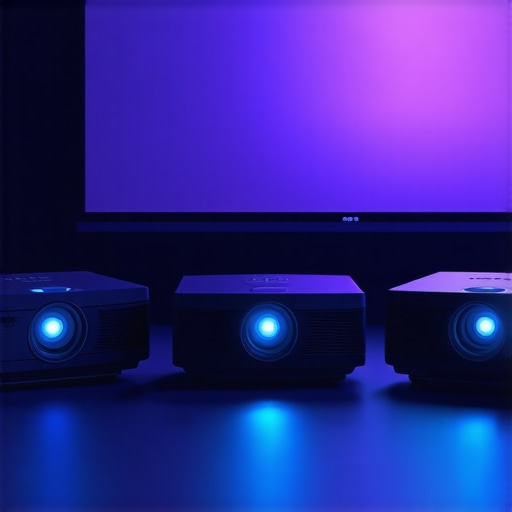
I remember the moment perfectly. I set up my brand-new ultra short throw projector in my living room, eager to enjoy crisp, stunning images for movie night. But when I turned it on, everything looked fuzzy—distorted keystones and blurry edges made the picture virtually unwatchable. Frustration set in. Turns out, I had fallen into some classic traps that many portable projector users still do today, even with all the latest 4K tech and laser illumination.
Why Making These Mistakes Can Ruin Your Viewing Experience
As someone passionate about home cinemas, I learned the hard way that small setup errors can blur your high-res dreams into pixelated nightmares. Keystone correction, for example, is meant to fix balance issues, but overdoing it or using the wrong settings can introduce distortions that ruin clarity. When the image becomes wavy or oddly shaped, it’s almost impossible to enjoy your favorite shows or immersive gaming sessions. And considering how fast projector tech is advancing—according to recent analyses, 4K laser projectors are now outperforming traditional TVs even in bright rooms—there’s simply no reason to settle for mediocre images because of avoidable mistakes.
In this post, I’ll share the three most common keystone mistakes that blur images and, more importantly, how you can avoid them. Whether you’re rocking a portable projector for backyard movies or setting up a dedicated home theater, mastering these simple calibration tips can make a world of difference.
Is Keystone Correction Actually Worth the Hype?
Early in my journey, I thought that using all the keystone correction available was necessary to get a perfect rectangular image. Spoiler: it isn’t. Overcorrecting can introduce distortion rather than fix it. Trust me, I learned this through trial and error—sometimes, the best approach is to reposition your projector slightly instead of relying solely on digital adjustments. If you’re skeptical, I completely get it. Many reviewers and pros warn against excessive use of keystone correction because, as research shows, digital image processing can generate artifacts that blur clarity. For more tricks on perfect setup, check out this guide.
With that foundation, let’s dive into the three key mistakes that can blur your images and exactly how to fix them before your next movie marathon or gaming session.
Reposition Your Projector Before Adjusting Settings
My first attempt to fix the fuzzy image involved tweaking the keystone correction repeatedly. However, this only worsened the distortion. Instead, I realized repositioning the projector slightly—about an inch to the left or right—significantly improved the image’s shape. When setting up any projector, especially ultra short throw models, aim to place it at the proper height and distance from your screen or wall. Use the projector’s manual or a laser measure to find the optimal distance that fills your space without excessive keystone correction. This basic step prevents digital adjustments from introducing unnecessary artifacts and sharpens your image from the start.
Fine-Tune Projector Placement with Leveling and Distance
Use a bubble level or smartphone app
During my setup, I used a simple bubble level placed on top of the projector to ensure it was perfectly horizontal. An uneven projector tilts can cause blurred edges or trapezoidal images. Equip yourself with a smartphone level app for precision, especially if you’re working with a ceiling mount or custom stand. Proper leveling maintains focus and ensures the image is symmetrical, reducing the need for digital correction. For ultra short throw projectors, maintaining the correct angle also helps maximize screen brightness and focus, particularly in rooms with reflective surfaces.
Adjust distance for optimal focus
My initial experiment was set too close, resulting in a blurry picture at the edges. Moving the projector back to the recommended distance—often specified in the manual—enabled proper lens focus. For 4K models, especially laser projectors, the focus is crucial to achieve sharp clarity across the entire image. Use the projector’s focus ring or autofocus feature if available, and test with high-resolution patterns or test screens. Remember, being too close or too far can cause blurriness or internal image softness that no calibration can fix later.
Calibrate the Image Brightness and Contrast
Once placement was correct, I adjusted brightness and contrast settings to match ambient lighting. Bright rooms require high lumen output from the projector—check your model’s lumen specs against the room’s lighting conditions. For portable projectors that may lack feature-rich menus, consider adjusting device placement and using reflective screens or curtains to improve contrast. Additionally, setting the contrast to prevent washed-out images—particularly in rooms with lots of ambient light—can make details pop and improve overall sharpness. Remember, a well-placed projector paired with proper settings is far better than relying solely on digital corrections.
Use External Screens When Possible
After experiencing internal reflections on a plain wall, I switched to a dedicated screen. Investing in a high-gain or ambient-light-rejecting (ALR) screen can dramatically enhance sharpness and reduce washout, especially when using 4K laser projectors that deliver stunning detail. Frames like those covered in the home theater guides provide insight into selecting the right surface for your environment. Remember, even the best projector will struggle to produce crisp images without a suitable screen surface designed for high-resolution content and ambient conditions.
Test and Iterate Until Perfect
The key to optimal image quality is patience and iteration. I recommend projecting test patterns—high-contrast grids or detailed images—and examining them closely. Adjust placement, focus, and settings gradually. For example, a slight tilt correction or shifting the projector a few degrees can eliminate wavy edges. Every environment is different, so don’t hesitate to experiment more. For expert tips on calibration, visit this calibration guide. Mastering these core techniques ensures your portable or ultra short throw projector delivers an image that rivals cinema quality—without the frustration.
Many enthusiasts assume that investing in the latest laser or 4K portable projectors guarantees perfect image quality without much effort. However, a common misconception is that advanced technology automatically compensates for setup nuances. In reality, even cutting-edge projectors have their pitfalls if not properly configured. For instance, some believe that ultra short throw (UST) projectors can be placed haphazardly against a wall, but optimal placement is critical to prevent image distortion and ensure sharpness according to experts.
Another myth is that higher lumen output directly translates to better images in ambient light. While brightness is important, many overlook the significance of contrast ratios and screen material, which greatly influence perceived image quality. An ultra-high lumen projector may produce a washed-out picture if used with a reflective or overly glossy screen in a bright room. Therefore, understanding the nuances of your environment and choosing the right screen surface is essential for achieving theater-like results this guide.
Several users fall into the trap of relying solely on keystone correction to fix setup issues. This digital adjustment can introduce distortions if overused or applied incorrectly. The real secret lies in precise physical placement—adjusting distance, angle, and levelness—to minimize the need for digital correction. Mastering these setup fundamentals can prevent the common mistake of sacrificing image clarity for convenience.
Is It Always Better to Use the Highest Resolution?
A more subtle misconception involves resolution. Many think that 4K is always superior, but in certain scenarios, especially when projecting onto non-standard surfaces or at non-ideal distances, ultra-high resolution can highlight imperfections in screen surfaces or calibration. Additionally, 4K content demands more processing, which can introduce artifacts if not properly managed. Experts recommend focusing on overall calibration, contrast, and placement first, then selecting resolution settings to match your content and environment this comprehensive guide.
By digging into these subtleties, it becomes clear that becoming an advanced projector user involves more than just hardware—it’s about mastering placement, calibration, and environment considerations. Misconceptions like these can diminish your investment’s potential, leaving you with subpar visuals despite the latest tech. So next time you upgrade or set up your system, double-check these common myths and avoid costly mistakes. Have you ever fallen into this trap? Let me know in the comments!
,
How do I maintain my projector over time to ensure consistent performance?
Keeping your projector in prime condition isn’t just about occasional cleaning; it involves a combination of proper tools, routine checks, and understanding the specific needs of your device. Personally, I rely on a few specialized items that have proven invaluable in prolonging the lifespan and maintaining the high-quality image performance of my laser and 4K projectors. For instance, I use a compressed air canister to gently remove dust from internal vents and filters, preventing overheating and color degradation. Regularly cleaning the air filters with a soft brush ensures optimal airflow, especially important for ultra short throw and high-lumen models that generate more heat.
Another crucial aspect is firmware updates. I make it a point to stay current with my projector manufacturer’s latest firmware, which often includes performance improvements and bug fixes. These updates can be downloaded via the manufacturer’s app or website and installed through a USB or network connection, depending on your projector model. This step is vital as it helps in maintaining compatibility with new content formats and fixing bugs that could cause image degradation or connectivity issues.
Additionally, I recommend calibrating your settings periodically. Even a well-calibrated setup can drift over time due to environmental changes like room lighting or projector placement. Using professional calibration tools like SpyderX colorimeters or similar allows me to fine-tune color accuracy and gamma settings, ensuring the sharpest, most vibrant images over the long term. Regular calibration is especially critical when upgrading to a new source device or changing screens or room conditions.
Long-term tools and techniques for projector care
Investing in a high-quality lens cleaner ensures that dust or fingerprints don’t obscure the image. I prefer microfiber cloths and gentle cleaning solutions specifically formulated to avoid scratches or residue. For ultra short throw projectors, using adjustable mounts that can be precisely leveled and stabilized is essential; I routinely check mount screws and use bubble levels or laser alignment tools to prevent subtle shifts that can compromise image geometry and clarity.
Predictions suggest that as projector technology advances—especially with developments like laser phosphor illumination and 8K resolutions—the way we maintain devices will evolve. Remote diagnostics, AI-driven calibration, and predictive maintenance alerts are on the horizon, making upkeep easier and more effective. Staying ahead in this trend means investing in versatile tools today, such as dedicated cleaning kits and calibration software, and ensuring you follow best practices for regular checks and firmware updates.
For example, I highly recommend checking out the detailed guide on calibration techniques provided in this resource. Implementing even one of these advanced maintenance tips can significantly improve your projector’s lifespan and picture quality. Don’t wait until your image starts to fade; start your routine today and enjoy the best possible performance from your home theater system. And if you’re interested in upgrading your setup, explore my favorite high-lumen portable projectors that are built to last in demanding environments, further ensuring your investment’s longevity.
Surprising Lessons Behind the Perfect Image
One of the most impactful lessons I learned is that even the most advanced portable projector can’t compensate for a poor setup. I once believed that the latest 4K laser projector would deliver cinematic quality straight out of the box. However, I quickly discovered that meticulous placement, level surface, and proper focus are irreplaceable. This revelation taught me that technology alone doesn’t guarantee quality; thoughtful calibration makes all the difference.
Another insight came from realizing that digital keystone correction, while tempting, often introduces unwanted distortions. The lightbulb moment was understanding that physical positioning—repositioning the projector slightly—can preserve image sharpness better than relying solely on digital adjustments. This approach saved me countless hours of frustration and improved my overall viewing experience.
Lastly, I underestimated ambient light’s effect on image clarity. Investing in a high-quality screen and controlling room lighting significantly enhanced contrast and sharpness. This experience underscored that environment shaping is just as crucial as choosing the right projector. Remember, even superior tech can’t perform miracles without the right setup and environment.
Tools That Elevated My Home Cinema Game
For consistent performance, I rely heavily on a good bubble level and a laser distance meter. These tools are game-changers, ensuring optimal placement and focus. Investing in a quality calibration device like the SpyderX colorimeter helped me fine-tune colors and contrast, maintaining image integrity over time.
Firmware updates and regular cleaning are often overlooked but vital. I subscribe to my projector’s newsletter and set reminders for firmware upgrades, which often include performance improvements. Likewise, routine cleaning of dust filters with soft brushes keeps airflow optimal, preventing heat buildup that could dull image quality.
Finally, I trust resources like the ultimate calibration guide to stay ahead in maintaining my setup. These tools and resources form my core toolkit, ensuring my projector performs at its best for every movie or gaming session.
Your Next Step in Creating a Cinematic Sanctuary
Embracing the nuances of setup and calibration transforms your portable or ultra short throw projector into a true home cinema masterpiece. Don’t let misconceptions hold you back—master the positioning, environment, and calibration for stunning, sharp images that make your investment worthwhile. Every small adjustment is a step closer to that immersive experience you’ve envisioned. Remember, this journey is about learning and refining; your perfect home theater is within reach. Curious about fine-tuning your system? Dive into detailed guides or reach out through the contact page and let’s craft your ideal projection setup together.
Have you faced challenges in calibrating your projector? Share your experience below, and let’s learn from each other’s journey to cinematic perfection!