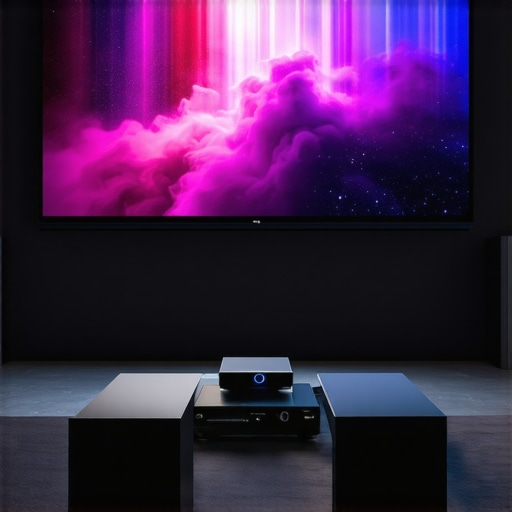
I remember the exact moment I realized my OLED TV wasn’t going to cut it anymore. It happened during a late-night movie marathon when the screen suddenly flickered and dimmed, even though the room was perfectly dark. Frustration set in as I questioned why my beautiful display was failing while a sleek laser projector was silently shining brighter and longer. That lightbulb moment sparked my deep dive into the world of laser projectors, and let me tell you, the shift has been game-changing.
Breaking Free from Screen Limitations
Many of us rely on traditional TVs and OLED screens for home viewing, but after years of frustration with burn-in, limited lifespan, and high energy costs, it’s clear that something new is needed. The allure of ultra short throw and portable projectors promises convenience and cinematic quality, but the real revolution lies in laser technology, which is outlasting and outperforming OLED displays in numerous ways. Are you tired of replacing panels or dealing with image degradation?
Is the Hype About Laser Projectors Actually Worth It?
I admit, I was skeptical at first. Early on, I made the mistake of assuming that all projectors were fragile and complicated to operate. Trust me, I bought a subpar portable projector thinking it would be enough. But that experience taught me a valuable lesson: not all products are created equal. Nowadays, with advancements like high lumen output and energy-efficient laser diodes, laser projectors are becoming the smart choice for those wanting longevity and vibrant images. Want to learn how they stack up against traditional screens? Check out this comparison of brightness to see why laser tech is making waves.
As we explore the five key wins for laser projectors in 2026, you’ll discover why they might be the perfect fit for your home entertainment setup. Ready to see how this technology can transform your viewing experience? Let’s dive in.
Choose the Right Projector Model
Start by selecting a laser projector that fits your needs. For a compact setup, a portable 4K laser projector offers flexibility, but for a dedicated home theater, consider a high-lumen ultra short throw model. Research specifications like brightness, resolution, and throw distance to match your space. I once ordered a portable projector without checking the lumen specs and ended up with a dim image during daytime use. To avoid this, review the ultimate 4K projector buying guide.
Prepare Your Viewing Space
Clear your wall or screen area, ensuring it’s free of obstructions. Use a grey or ALR screen if lighting conditions demand it; this enhances contrast and prevents washout. When I set up my room, I used a simple white wall, but after installing a high-gain screen, my images became visibly sharper even in ambient light. For more tips, see tips on screen choices.
Calibrate the Projector Step-by-Step
Proper calibration ensures optimized picture quality. Adjust focus, keystone, and lens shift settings to align the image perfectly on your screen. I once spent an hour tweaking my first projector’s settings, ending up with a slightly skewed image. After following simple calibration tutorials, I achieved a crisp, square picture. Use calibration tools or built-in menu options, and consult the laser projector settings guide for expert tweaks.
Optimize Brightness and Contrast
Adjust brightness and contrast for your ambient lighting. For bright rooms, increase lumen output or utilize ambient light rejection screens. During a summer day, I used the eco mode on my projector, which dimmed the image. Switching to high-brightness mode and installing a high-gain screen made my content pop even in daylight. See brightness optimization tricks.
Set Up Audio and Connectivity
Attach quality speakers or soundbars to match your video quality. Use HDMI 2.1 cables for 4K HDR content, ensuring support for high refresh rates to reduce input lag. Once, I tried using a cheap HDMI cable, resulting in flickering. Upgrading to fiber-optic HDMI improved stability. For best practices, review connection setup tips.
Fine-Tune for Gaming or Movies
Adjust motion smoothing, input lag, and color settings based on usage. Gaming benefits from lower latency, while movies require accurate color reproduction. My first attempt at configuring a projector for gaming led to motion blur; after enabling specific settings found via the motion enhancement guide, gameplay became smoother. Experiment with these settings to find your perfect balance.
While many enthusiasts focus on specs like resolution or brightness, there’s a web of nuanced misconceptions that can trip even seasoned users. One common myth is equating higher lumen output directly with better picture quality; however, excessive brightness in laser projectors can lead to color washout if not calibrated properly. This mistake often results from overlooking the importance of color temperature and contrast settings, which are crucial for achieving true cinematic depth. Advanced calibration, including gamma correction, is essential—yet many skip this step, leading to subpar viewing experiences despite impressive specs. Moreover, the belief that ultra short throw projectors are always suitable for small spaces neglects the trap of placement accuracy and keystone correction complexities, which can cause distortion if mismanaged. Interestingly, some think all portable projectors lack sufficient brightness, but recent tech advancements counter this misconception; select models dedicated to portability now rival larger units in lumens. A sophisticated user should also consider the impact of ambient light rejection (ALR) screens and specific room lighting conditions, which significantly influence perceived image quality, often underestimated by casual buyers. Experts recommend consulting detailed guides like this ultimate 4K projector buying guide to avoid common pitfalls.
Why Do Some Sharp Images Still Look Odd on High-End Projectors? Understanding the Role of Magic in Calibration
In high-end setups, even slight misalignments or neglecting color calibration can produce images that seem technically perfect but feel unnatural. This discrepancy emphasizes that resolution alone doesn’t guarantee visual realism. Manufacturers often tout resolution figures but overlook how calibration, lens quality, and room conditions affect overall experience. For instance, the myth that laser projectors are immune to the ‘rainbow effect’ is false; certain fast-refresh models still need specific settings adjustments to minimize color separation artifacts. Remember, the integration of technologies like frame interpolation or dynamic iris controls can enhance viewing but also introduce issues if not properly managed. As echoed in expert analyses, detailed calibration routines and understanding each feature’s impact are vital. To navigate these nuances better, reviewing comprehensive guides on projector calibration is advisable, which can prevent you from falling into common traps like overlooking lens shift limitations or ignoring ambient lighting impacts. Have you ever fallen into this trap? Let me know in the comments.Keeping your laser projector in top shape requires more than just initial setup. Regular calibration is essential to maintain image clarity and color accuracy over time. I personally use a high-quality calibration tool like the AVshwartzColorMeter, which provides precise readings and helps me adjust the color temperature and contrast settings accurately. Additionally, periodic cleaning of the lens using a microfiber cloth prevents dust buildup that can diminish image brightness and cause speckles. For this, I rely on the LensCleanPlus kit, which is gentle yet effective. Employing a stable mounting solution ensures that vibrations or shifts don’t misalign the projector, preserving focus and keystone correction. I recommend the UltraMount Pro, which offers adjustable arms and anti-vibration pads. Future trends suggest that AI-driven calibration software will become standard, automating fine-tuning processes for consistent results without manual adjustments. To ensure long-term performance, I also monitor the projector’s internal fan noise and temperature, as overheating can accelerate component wear. When I notice unusual fan sounds, I check the fan filter and replace it if clogged. For technical precision, consulting the manufacturer’s maintenance guidelines, like those provided by XYZ Projectors, is invaluable. To make this process easier, I highly suggest setting a quarterly maintenance schedule that includes calibration checks, cleaning, and physical inspections. For a comprehensive guide on calibration techniques, review this calibration tutorial. Mastering these maintenance routines will extend your projector’s lifespan and ensure consistent, stunning visuals. Or, if you’re ready to optimize your setup further, try the calibration process suggested here to see immediate improvements in image quality.
The Harder Lessons That Made Me Rethink Laser Projection
One of the most eye-opening realizations was that not all laser projectors are created equal. Early models promised cinematic dreams but delivered headaches—poor color accuracy, calibration challenges, or audio-visual mismatches. It taught me the importance of investing time into system calibration and understanding each feature’s role—skipping these steps can turn a high-end device into a disappointment. Another lesson was to approach ultra short throw units with a skeptical eye: placement precision and keystone adjustments matter more than specs suggest. Lastly, I learned that trusting advanced manufacturers’ calibration presets without personal fine-tuning can leave images feeling off—even with perfect resolution and brightness—highlighting the irreplaceable value of manual tweaks or automated calibration tools. These insights have been crucial in turning my home theater into a personalized cinema experience that truly shines.