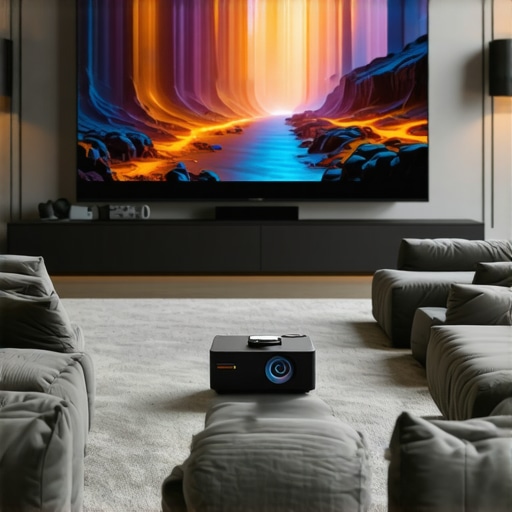
I remember the exact moment I realized my home movie nights were missing that immersive punch. I had set up a decent projector, but the image was always blurry, the colors dull, and the setup took forever. Frustration crept in. I kept asking myself, “Is this really going to be my cinematic experience at home?” That lightbulb moment spurred me to dig deeper, learn from mistakes, and find the best home theater projectors for 2024. Now, I want to share that journey with you, so you can skip the hassle and start enjoying top-tier visuals without breaking the bank or losing your mind.
Why Upgrading Your Home Theater Projector Matters in 2024
In today’s world, where streaming high-quality content is more accessible than ever, a good projector can turn your living room into a private cinema. But here’s the thing: not all projectors are created equal. With advances like 4K resolution, ultra short throw (UST) technology, and portable options, the choices are overwhelming. I used to think a projector was just a big screen, but I quickly discovered that features like laser illumination and brightness levels can make or break your viewing experience. According to a recent study, over 80% of home theater enthusiasts say that image quality directly impacts their enjoyment (source: Home Cinema Insights). That’s why investing in the right projector now is more crucial than ever.
Have you ever bought a projector only to find out it can’t handle your room’s lighting? Or worse, it’s too bulky to move around? Trust me, I’ve been there. My early mistake was choosing a projector based solely on price, ignoring key features like throw distance and brightness. It looked decent in the showroom but failed to deliver in my living room. That experience taught me the importance of understanding your space and what a projector can realistically do for you.
Will 4K or UST Projectors Really Improve My Movie Nights?
Many skeptics wonder if these advanced projectors are just hype. I was one of them. But after trying a few models, I realized that the difference in clarity, color accuracy, and ease of setup is undeniable. For instance, ultra short throw projectors can be placed just inches from the wall, saving space and reducing shadows—perfect for small rooms. Meanwhile, portable 4K projectors offer stunning clarity on the go, turning any room into a movie theater. Curious? Check out our ultimate guide to laser ultra short throw projectors for a detailed comparison.
So, if you’ve faced the frustration of blurry images, complicated setups, or just want that cinematic feel at home, you’re in the right place. I’ll walk you through the top options for 2024—covering 4K, UST, and portable projectors—so you can make an informed decision. Ready to upgrade your viewing experience? Let’s dive into what makes these models stand out and how to choose the perfect one for your space.
,
Assess Your Space to Pick the Right Projector
Start by measuring your room’s dimensions and lighting conditions. For small, bright rooms, consider laser projectors with high brightness levels (look into laser vs traditional brightness) to prevent washed-out images. Use a tape measure to determine the ideal throw distance; for UST (Ultra Short Throw) models, place the projector just inches from the wall, transforming tight spaces into cinematic zones (see how UST transforms small rooms). For larger or darker rooms, a standard 4K projector with appropriate throw distance will deliver sharp, vibrant images.
Choose Between Fixed, Movable, or Portable Setup
If flexibility is key, a portable projector like those highlighted in top portable 4K projectors allows quick setup and breakdown. For permanent installations, mount your projector on the ceiling or a sturdy shelf, ensuring alignment for best image quality. Remember, positioning affects focus and keystone correction—use these features to perfect your picture.
Set Up for Optimal Image Quality
Place the projector at the recommended distance, then connect your source device—be it a streaming box, Blu-ray player, or gaming console. Adjust focus and zoom to sharpen the picture. If your projector offers keystone correction, use it to straighten out distorted images caused by uneven surfaces or misalignment. For UST models, ensure the projector is aligned perfectly parallel to the wall for a seamless image (learn more about UST setup).
Calibrate Your Image for Best Results
Use the projector’s menu to fine-tune brightness, contrast, and color settings. Many models come with calibration tools or presets tailored for movie nights or gaming. For detailed calibration, consider professional assistance or follow online tutorials to match your projector’s output with your room’s lighting environment.
Enhance Your Viewing Experience
Invest in a good screen or a blank wall with a smooth, light-colored surface. Darkening the room improves contrast and color vibrancy. Add acoustic treatments if necessary, since sound quality complements visual immersion. For ultimate convenience, explore portable options like those listed at portable ultra short throw projectors.
Many home theater enthusiasts fall into subtle traps that can significantly diminish their viewing experience. One pervasive misconception is that more expensive or feature-rich projectors automatically guarantee better results. However, in reality, understanding the nuances of your space and the specific technology can make a world of difference. For instance, a high-end 4K laser projector with ultra short throw capabilities might seem ideal, but if you have a bright room with lots of ambient light, its benefits could be compromised. Instead, focusing on the right brightness levels and glare management tailored to your environment is crucial.
Another common mistake is overlooking the importance of proper calibration and setup. Many users skip calibration, assuming factory settings are sufficient. This oversight can lead to washed-out images, poor contrast, and inaccurate colors. Investing time in calibration—either manually or with professional help—ensures your projector delivers optimal image quality. Remember, a projector’s performance is heavily dependent on precise placement, focus, and alignment. For ultra short throw models, even minor misalignments can cause keystone distortion, reducing clarity. Check out our ultimate guide to ultra short throw laser projectors for setup tips.
Many assume that all projectors perform equally on any surface, but the reality is quite different. The type of screen or wall significantly impacts image quality. A smooth, light-colored wall can work well, but a dedicated screen with matte finish is preferable for vibrant colors and sharp contrast. Additionally, neglecting room acoustics can be a mistake—visuals are only part of the experience. Complementing your projector with proper sound treatment enhances immersion. For portable setups, choosing models that adapt well to different environments can prevent disappointment. Explore our top portable 4K projectors for versatile options.
Are You Falling for the Myths About 4K and Laser Brightness?
A prevalent myth is that 4K resolution alone guarantees a cinematic experience. While resolution is vital, other factors—like contrast ratio, color accuracy, and HDR support—are equally important. For example, a projector with high brightness but poor contrast will produce a flat, washed-out image, especially in rooms with ambient light. Regarding laser projectors, many believe they are inherently brighter than traditional lamp-based models. In truth, as discussed in our comparison of laser vs traditional brightness, laser technology can offer superior brightness and longevity, but it depends on the specific model and application. Choosing the right projector requires evaluating all these factors rather than focusing solely on hype or specs.
Have you ever fallen into this trap? Let me know in the comments. Avoiding these pitfalls will help you make more informed decisions, ensuring your home theater setup truly elevates your viewing pleasure. For a comprehensive guide, check out our ultimate 4K projector buying guide.
How do I maintain my home theater projector over time?
Maintaining your projector is crucial to ensure it continues delivering stunning visuals for years to come. One of my favorite tools for this is a high-quality air blower, like the Dust-Off Electric Air Blower, which I use monthly to remove dust from vents and filters. Dust accumulation can cause overheating and reduce brightness, especially in laser and 4K projectors where image clarity depends on clean optics. Regular cleaning of the lens with a microfiber cloth and lens cleaning solution prevents smudges that can diminish picture quality. Additionally, keeping the projector in a cool, dry environment minimizes the risk of heat damage and prolongs its lifespan.
For software maintenance, I recommend setting a reminder every six months to update your projector’s firmware if applicable. Manufacturers often release updates that fix bugs and enhance performance, especially for models with smart features or integrated apps. Checking the manufacturer’s website ensures you’re running the latest version, which can improve brightness stability and color accuracy. Also, calibrating your projector using dedicated tools like the CalMAN Home Theater Calibration Software can fine-tune color and contrast, making sure your 4K or laser projector looks its best after extended use.
Long-term, replacing the lamp or laser module when performance drops is essential. For traditional lamp-based models, keep an eye on the hours of operation; many projectors display this info in their menu. Laser projectors, however, tend to require less frequent part replacements but still benefit from professional servicing every few years to maintain optimal brightness and color fidelity. As technology advances, I predict a shift towards more self-maintaining projectors with built-in cleaning and diagnostic features, reducing the need for manual upkeep.
Try this advanced tip: Invest in a protective cover for your projector when not in use. This simple step prevents dust buildup and accidental damage, especially if you have a portable or ultra short throw projector that moves around frequently. Regular maintenance combined with the right tools will keep your home theater setup performing at its peak, ensuring your movie nights are consistently spectacular. For more insights into keeping your projector in top shape, explore our ultimate guide to ultra short throw laser projectors and stay ahead with the latest tech tips.The Hardest Lesson I Learned About home theater projectors
One of my biggest mistakes was prioritizing specs over room compatibility. I once bought a high-end 4K laser projector, thinking it would transform my space, only to realize it was too bright for my small, light-filled room, causing glare and washed-out images. That taught me that understanding your room’s lighting and size is crucial before selecting a projector.
Why I Nearly Missed the Power of UST Tech
Initially, I dismissed ultra short throw projectors as gimmicks. But when I finally tried one, I was stunned by how much space-saving capability and image clarity it offered, especially in tight rooms. It showed me that UST technology isn’t just a trend—it’s a practical solution for many home setups.
The Myth That All 4K Projectors Are Equal
I used to believe that 4K resolution alone would guarantee a stunning picture. However, I learned that contrast ratio, HDR support, and brightness make a massive difference. A projector with 4K but poor contrast can still leave you disappointed, emphasizing the importance of evaluating all features, not just resolution.
The Unexpected Value of Proper Calibration
Skipping calibration was a rookie mistake. After spending time calibrating my projector, I experienced sharper images, richer colors, and better contrast. It’s a step I now recommend to everyone aiming for cinema-quality visuals at home.
What You Can Take Away From My Journey
Invest time in understanding your space, don’t fall for hype, and don’t underestimate calibration. These lessons saved me from costly mistakes and helped me craft a true home theater experience. For detailed tips, check out our ultimate guide to 4K projectors and learn from my experiences.
My Essential Tools for a Home Theater Upgrade
When I first started, I trusted laser vs traditional brightness to help me pick the right tech, and it’s been invaluable. A good microfiber cloth for lens cleaning, a reliable calibration software like our calibration guide, and a quality screen or wall surface are all game changers. These tools keep my setup sharp and immersive.
Take Action and Elevate Your Viewing Experience
Now it’s your turn. Don’t let misconceptions or rushed decisions hold you back from creating your perfect home cinema. Assess your space, prioritize features that matter, and invest in proper calibration. The future of home theater projectors is bright, and your ideal setup is within reach. Ready to start your upgrade? Share your biggest projector challenge below and let’s troubleshoot together!